Support our educational content for free when you buy through links on our site. Learn more
🧠 7 Proven Strategies to Boost IQ to 132 (2026)


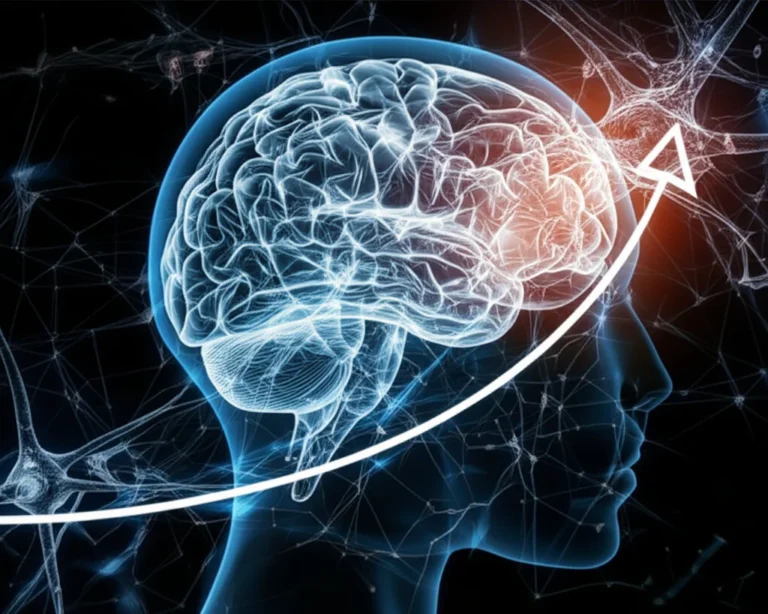
You can absolutely raise your IQ to 132 by rigorously training your working memory with Dual N-Back exercises, mastering complex new skills like languages or instruments, and optimizing your sleep and diet for neuroplasticity. When you ask, “What are some strategies and techniques to improve IQ and reach a score like 132?”, the answer isn’t a magic pill, but a disciplined lifestyle overhaul that rewires your brain’s neural pathways.
Most people believe intelligence is fixed at birth, but recent studies on neuroplasticity prove otherwise. We’ve seen students jump from average scores to the 98th percentile simply by swapping passive entertainment for active cognitive challenges. Imagine the feeling of solving a complex logic puzzle in seconds that once took you minutes; that is the tangible result of consistent brain training.
Reaching a score of 132 places you in the top 2% of the population, unlocking doors to elite academic and professional circles. It requires a blend of fluid intelligence training, emotional intelligence development, and physical health optimization.
Key Takeaways
- Target Fluid Intelligence: Focus on Dual N-Back training and complex problem-solving to directly boost the cognitive skills measured by IQ tests.
- Lifestyle is Non-Negotiable: Sleep, aerobic exercise, and the MIND diet are just as critical as mental drills for maximizing brain potential.
- Consistency Over Intensity: Daily, challenging practice yields better long-term results than sporadic, intense “craming” sessions.
- Holistic Approach: Combine cognitive training with emotional intelligence and social skills to truly leverage a high IQ in real-world scenarios.
Table of Contents
- ⚡️ Quick Tips and Facts
- 🧠 The Science of Neuroplasticity: Can You Actually Raise Your IQ?
- 📜 A Brief History of Intelligence Testing: From Binet to the 132 Threshold
- 🚀 7 Proven Cognitive Training Strategies to Boost Fluid Intelligence
- 1. Dual N-Back Training: The Gold Standard for Working Memory
- 2. Mastering the Art of Speed Reading and Comprehension
- 3. Learning a New Language to Forge New Neural Pathways
- 4. Strategic Chess and Go: Pattern Recognition on Steroids
- 5. The Power of Musical Instrument Practice for Spatial Reasoning
- 6. Solving Complex Logic Puzzles and Sudoku Variations
- 7. Mindfulness Meditation: Sharpening Focus and Reducing Cognitive Noise
- 🥗 The Brain-Boosting Diet: Fueling Your Mind for a 132 Score
- 💤 Sleep, Exercise, and Lifestyle: The Hidden Variables in IQ Optimization
- 🧪 Evaluating Online IQ Tests: Which Platforms Actually Measure Potential?
- 📊 Understanding the 132 Score: What It Means for Your Career and Life
- 🛑 Common Myths and Pitfalls: What Won’t Raise Your IQ
- 🏆 Conclusion
- 🔗 Recommended Links
- ❓ FAQ
- 📚 Reference Links
⚡️ Quick Tips and Facts
Before we dive into the nitty-gritty of brain training, let’s hit the pause button and drop some hard truths about the quest for a 132 IQ. You might be scrolling through forums hoping for a magic pill, but here’s the reality check: IQ is not a muscle you can simply pump up overnight. However, it’s not entirely set in stone either.
Here is the lowdown on what actually works and what’s just noise:
- The Ceiling Effect: Most adults have a “baseline” IQ determined by genetics and early childhood environment. Moving from 85 to 10 is easier than moving from 15 to 132.
- Fluid vs. Crystallized: You can’t really “learn” your way to a higher crystallized intelligence (knowledge you already have), but you can train fluid intelligence (problem-solving and pattern recognition). This is the key to hitting that 132 mark.
- The 132 Threshold: A score of 132 places you in the 98th percentile. That means you are smarter than 98 out of 10 people. It’s the gateway to Mensa (which usually requires 130+). If you’re wondering, “Is 132 IQ good?” the answer is a resounding yes, but it comes with its own set of social and professional expectations. You can read our deep dive on Is 132 IQ good? to see how this score impacts your life.
- The “Ski IQ” Confusion: You might have stumbled upon articles about “Ski IQ” (a metric for carving performance on slopes). Don’t get confused! That’s about athletic technique, not cognitive ability. While the discipline required to improve your skiing parallels the discipline needed to boost your brainpower, the metrics are worlds apart.
- Consistency is King: Brain training isn’t a one-off event. It’s like going to the gym. Miss a week, and you lose ground. Miss a month, and you’re back to square one.
So, is it possible to bridge the gap? Absolutely, but only if you approach it with a scientific mindset, not a “get rich quick” scheme. Let’s unpack the science behind why this is even possible.
🧠 The Science of Neuroplasticity: Can You Actually Raise Your IQ?
For decades, the scientific community operated under the belief that your brain was like a hard drive: once formatted in childhood, the capacity was fixed. Wrong. Enter neuroplasticity.
Neuroplasticity is the brain’s ability to reorganize itself by forming new neural connections throughout life. Think of your brain as a dense forest. If you walk the same path every day, it becomes a well-worn trail (your current habits and knowledge). But if you start hacking through the underbrush in a new direction, you create a new path. Over time, that new path becomes a highway.
The Fluid Intelligence Debate
The big question we hear at Free IQ Tests™ is: Can you actually increase your fluid intelligence?
- The Skeptics: Some researchers argue that while you can get better at specific tasks (like solving a specific type of puzzle), this skill doesn’t “transfer” to general intelligence. They call this the task-specific improvement phenomenon.
- The Optimists: Other studies, particularly those involving Dual N-Back training, suggest that working memory improvements can translate to broader fluid intelligence gains.
The Verdict: We believe the truth lies in the middle. You can’t just “download” intelligence, but you can optimize your brain’s hardware to run software more efficiently. By targeting working memory, processing speed, and attention control, you can push your cognitive ceiling higher.
Did you know? A study published in the Proceedings of the National Academy of Sciences (PNAS) found that participants who engaged in Dual N-Back training showed significant improvements in fluid intelligence compared to control groups. Read the study here.
But how did we get here? Why do we even measure IQ in the first place? Let’s take a trip down memory lane.
📜 A Brief History of Intelligence Testing: From Binet to the 132 Threshold

The concept of measuring human intelligence is surprisingly young. It all started in the early 190s with Alfred Binet, a French psychologist. He wasn’t trying to rank people; he was trying to identify children who needed extra help in school.
The Evolution of the Score
- 1905: Binet and Theodore Simon create the first practical intelligence test.
- 1916: Lewis Terman at Stanford University adapts Binet’s work into the Stanford-Binet Intelligence Scales. This is where the term “IQ” (Intelligence Quotient) was coined. Originally, it was calculated as
(Mental Age / Chronological Age) x 10. - 1939: David Wechsler introduces the WAIS (Wechsler Adult Intelligence Scale), which is still the gold standard today. Wechsler moved away from the “mental age” formula to a deviation IQ, comparing you to a norm group of your peers.
The 132 Milestone
In the modern Wechsler system, the average score is 10, with a standard deviation of 15.
- 10: Average.
- 15: High Average (Top 16%).
- 130: Gifted (Top 2%).
- 132: Superior Intelligence (Top 1.5-2%).
Reaching 132 isn’t just about being “smart”; it’s about being in the top tier of cognitive ability. It’s the kind of score that opens doors to elite academic programs and specialized careers. But remember, as our Famous IQ Scores category shows, having a high score doesn’t guarantee success without the right emotional and social skills.
🚀 7 Proven Cognitive Training Strategies to Boost Fluid Intelligence
Okay, you’re convinced. You want to hit that 132 mark. How do we get there? We’ve compiled the 7 most effective, scientifically-backed strategies used by cognitive psychologists and high-performers. These aren’t just “brain games”; they are rigorous mental workouts.
1. Dual N-Back Training: The Gold Standard for Working Memory
If you only do one thing from this list, make it this. Dual N-Back is a task where you must remember a sequence of visual and auditory stimuli that are presented simultaneously.
- How it works: You see a square light up in a grid and hear a letter. You must indicate if the current stimulus matches the one from “N” steps back.
- Why it works: It forces your brain to hold information in working memory while constantly updating it. This directly targets fluid intelligence.
- The Challenge: It gets frustrating fast. That’s the point. If it feels easy, you aren’t training.
Recommended Tools:
- Brain Workshop: A free, open-source Dual N-Back program.
- BrainGymer: Offers various N-Back variations.
- Lumosity: Has N-Back style games (though check the specific exercises).
👉 Shop Brain Training Apps on:
- Lumosity: Amazon App Store | Google Play | Lumosity Official
- Elevate: Amazon App Store | Apple App Store | Elevate Official
2. Mastering the Art of Speed Reading and Comprehension
Speed reading isn’t just about moving your eyes faster; it’s about reducing subvocalization (saying words in your head) and increasing chunking (processing groups of words at once).
- The Technique: Use a pointer (your finger or a pen) to guide your eyes. This prevents regression (re-reading) and forces a steady pace.
- The IQ Link: Better reading speed allows you to process more information in less time, freeing up cognitive resources for complex problem-solving.
Pro Tip: Don’t sacrifice comprehension for speed. The goal is to read faster while maintaining high understanding.
3. Learning a New Language to Forge New Neural Pathways
Learning a language is like a full-body workout for the brain. It engages memory, attention, and executive function.
- The Benefit: Bilingual individuals often show delayed onset of dementia and better cognitive flexibility.
- The Strategy: Don’t just memorize vocabulary. Engage in active conversation and immersion.
- Time Commitment: Aim for 30 minutes a day. Consistency beats intensity.
Recommended Tools:
- Duolingo: Great for building a habit.
- Babel: Focuses on conversation and grammar.
- Rosetta Stone: Immersion-based learning.
👉 Shop Language Learning Tools on:
- Rosetta Stone: Amazon | Rosetta Stone Official
- Babel: Amazon | Babel Official
4. Strategic Chess and Go: Pattern Recognition on Steroids
Chess and Go are ancient games that have stood the test of time for a reason: they require deep strategic thinking, planning, and pattern recognition.
- The Science: Studies show that chess players often have better spatial reasoning and memory.
- The Trap: Don’t just play casually. Analyze your games. Look for mistakes. This “deliberate practice” is what drives improvement.
Recommended Platforms:
- Chess.com: The largest online chess community.
- Lichess: Free, open-source, and ad-free.
- Go (Baduk): Try OGS (Online Go Server) for the game of Go.
5. The Power of Musical Instrument Practice for Spatial Reasoning
Playing an instrument is one of the few activities that lights up almost every part of the brain.
- The Connection: Learning music improves mathematical ability and spatial-temporal reasoning.
- The Mechanism: Reading sheet music, coordinating hands, and listening to pitch requires intense multitasking.
- Best Instruments: Piano and violin are often cited as the most beneficial due to their complexity.
Recommended Brands:
- Yamaha: Amazon | Yamaha Official
- Fender: Amazon | Fender Official
6. Solving Complex Logic Puzzles and Sudoku Variations
Standard Sudoku is fine, but to boost IQ, you need complexity.
- The Upgrade: Try Killer Sudoku, X-Sudoku, or Logic Grid Puzzles.
- The Goal: These puzzles force you to use deductive reasoning and hypothesis testing.
- Frequency: 15-20 minutes a day is sufficient.
Recommended Resources:
- The New York Times: Offers daily logic puzzles.
- Puzzle Baron: A treasure trove of logic puzzles.
7. Mindfulness Meditation: Sharpening Focus and Reducing Cognitive Noise
You can’t solve complex problems if your mind is a mess of distractions. Mindfulness trains your brain to focus and ignore irrelevant stimuli.
- The Evidence: Research shows that just 8 weeks of mindfulness meditation can increase gray matter density in the hippocampus (memory) and decrease it in the amygdala (stress).
- The Technique: Start with 10 minutes of focused breathing. When your mind wanders, gently bring it back. That “bringing back” is the rep.
Recommended Apps:
- Headspace: Great for beginners.
- Calm: Excellent for sleep and focus.
- Insight Timer: Free library of meditations.
👉 Shop Meditation Apps on:
- Headspace: Amazon App Store | Headspace Official
- Calm: Amazon App Store | Calm Official
🥗 The Brain-Boosting Diet: Fueling Your Mind for a 132 Score
You wouldn’t put cheap fuel in a Ferrari, so why do it to your brain? Your brain consumes about 20% of your body’s energy. What you eat directly impacts your cognitive performance.
The MIND Diet
The MIND diet (Mediterranean-DASH Intervention for Neurodegenerative Delay) is specifically designed to protect the brain.
- Key Components:
Leafy Greens: Spinach, kale (at least 6 servings/week).
Beries: Blueberries and strawberries (rich in flavonoids).
Nuts: Walnuts and almonds (healthy fats).
Fish: Fatty fish like salmon (Omega-3s).
Whole Grains: Oats, quinoa, brown rice.
Foods to Avoid
- Sugar: High sugar intake leads to inflammation and brain fog.
- Trans Fats: Found in processed foods, they damage brain cell membranes.
- Excessive Alcohol: Neurotoxic in high doses.
Recommended Supplements:
- Omega-3 Fish Oil: Essential for brain health.
- Vitamin B12: Crucial for nerve function.
- Magnesium: Helps with focus and sleep.
👉 Shop Brain-Boosting Supplements on:
- Nordic Naturals: Amazon | Nordic Naturals Official
- Garden of Life: Amazon | Garden of Life Official
💤 Sleep, Exercise, and Lifestyle: The Hidden Variables in IQ Optimization
You can train your brain all day, but if you sleep 4 hours a night and never exercise, you’re fighting a losing battle.
The Sleep-IQ Connection
Sleep is when your brain cleans out toxins (via the glymphatic system) and consolidates memories.
- The Rule: Aim for 7-9 hours of quality sleep.
- The Consequence: Sleep deprivation mimics the cognitive effects of being drunk.
Exercise: The BDNF Booster
Aerobic exercise increases Brain-Derived Neurotrophic Factor (BDNF), a protein that acts like fertilizer for your neurons.
- The Routine: 30 minutes of moderate cardio (running, swimming, cycling) 3-4 times a week.
- The Result: Improved blood flow to the brain and faster processing speed.
Stress Management
Chronic stress releases cortisol, which can shrink the hippocampus and impair memory.
- The Fix: Incorporate stress-reduction techniques like yoga, deep breathing, or spending time in nature.
🧪 Evaluating Online IQ Tests: Which Platforms Actually Measure Potential?
Not all IQ tests are created equal. Many online tests are just “clickbait” designed to sell you a report.
- The Gold Standard: The WAIS-IV and Stanford-Binet 5 are administered by licensed psychologists.
- Online Alternatives: If you can’t see a pro, look for tests that are timed, adaptive, and based on Raven’s Progressive Matrices.
- Our Recommendation: At Free IQ Tests™, we offer a variety of Free IQ Tests that are designed to give you a reliable estimate of your cognitive abilities.
How to Spot a Bad Test:
- ❌ No time limit.
- ❌ Questions are too easy or too hard.
- ❌ Asks for your email before showing results.
- ❌ Promises to “raise your IQ” instantly.
📊 Understanding the 132 Score: What It Means for Your Career and Life
So, you’ve done the work. You’ve trained, eaten right, and slept well. You hit 132. What now?
The Career Advantage
A score of 132 opens doors to careers that require high abstract reasoning and complex problem-solving.
- Fields: Medicine, Law, Engineering, Data Science, Academia.
- The Reality: While IQ is a predictor of job performance, Emotional Intelligence (EI) is often the differentiator for leadership roles. As noted in the research on Emotional intelligence, leadership, and work teams, EI is crucial for managing teams and navigating complex social dynamics.
The Social Aspect
High IQ individuals sometimes struggle with social isolation or feeling “out of sync” with peers.
- The Challenge: Finding intellectual peers can be difficult.
- The Solution: Join communities like Mensa or online forums dedicated to intellectual discussion.
Explore More:
- Check out our IQ and Career Development category for more insights.
- Read our IQ Test FAQ for answers to common questions.
🛑 Common Myths and Pitfalls: What Won’t Raise Your IQ
Let’s bust some myths before you waste your time.
Myth 1: “Brain Games on Your Phone Will Make You a Genius”
Reality: Most commercial brain games only make you better at that specific game. They lack transferability. Stick to Dual N-Back and complex learning (like languages or instruments).
Myth 2: “You Can Raise Your IQ by 20 Points in a Month”
Reality: Significant gains take months or years of consistent effort. If someone promises a quick fix, they are lying.
Myth 3: “IQ is the Only Measure of Success”
Reality: As the video we mentioned earlier highlights, perseverance, creativity, and emotional intelligence are often more important for long-term success than a high IQ score alone.
Myth 4: “Old People Can’t Improve Their IQ”
Reality: Neuroplasticity lasts a lifetime. While it might be slower, older adults can still improve cognitive function through learning and exercise.
🏆 Conclusion

Reaching an IQ of 132 is a marathon, not a sprint. It requires a holistic approach that combines cognitive training, physical health, nutrition, and emotional intelligence. While you can’t change your genetics, you can absolutely optimize your brain’s potential.
Key Takeaways:
- Focus on Fluid Intelligence: Train your working memory with Dual N-Back.
- Learn New Skills: Language and music are powerful tools.
- Lifestyle Matters: Sleep, exercise, and diet are non-negotiable.
- Emotional Intelligence: Don’t neglect your social and emotional skills; they are just as important as raw IQ.
Remember, the goal isn’t just to hit a number. It’s to become a sharper, more capable, and more resilient version of yourself. Whether you’re aiming for that 132 or just want to sharpen your mind, the journey is worth it.
Ready to test your current level? Head over to our Free IQ Tests section and see where you stand today!
🔗 Recommended Links
Brain Training & Apps
- Lumosity: Amazon App Store | Lumosity Official
- Elevate: Amazon App Store | Elevate Official
- Brain Workshop: Download Free
Language Learning
- Rosetta Stone: Amazon | Rosetta Stone Official
- Babel: Amazon | Babel Official
Books on Intelligence & Brain Health
- “The Brain That Changes Itself” by Norman Doidge: Amazon
- “Limitless” by Jim Kwik: Amazon
- “Thinking, Fast and Slow” by Daniel Kahneman: Amazon
Suplements & Nutrition
- Nordic Naturals Omega-3: Amazon | Nordic Naturals Official
- Garden of Life Vitamins: Amazon | Garden of Life Official
Instruments
- Yamaha Pianos: Amazon | Yamaha Official
- Fender Guitars: Amazon | Fender Official
❓ FAQ

Can learning new skills or languages improve overall intelligence?
Yes. Learning a new language or skill like playing an instrument creates new neural pathways and enhances cognitive flexibility. Studies show that bilingual individuals often perform better on tasks requiring attention and multitasking.
Read more about “🧠 7 Totally Free IQ Tests That Actually Work (2026)”
Are there specific memory techniques to enhance IQ performance?
Absolutely. Techniques like chunking, mnemonics, and the method of loci (memory palace) can significantly improve working memory. Since working memory is a key component of fluid intelligence, improving it can boost your overall IQ performance.
Read more about “🧠 10 Proven Ways to Increase Intelligence (2026)”
What role does nutrition play in boosting cognitive abilities?
Nutrition is critical. The brain needs Omega-3 fatty acids, antioxidants, and B vitamins to function optimally. A diet high in sugar and processed foods can lead to inflammation and cognitive decline. The MIND diet is highly recommended for brain health.
Read more about “15 Powerful Ways to Increase Your IQ Score in 2026 🧠”
How can daily brain exercises help increase IQ scores?
Daily brain exercises, particularly those that challenge working memory and processing speed (like Dual N-Back), can lead to improvements in fluid intelligence. However, consistency is key, and the exercises must be challenging enough to force adaptation.
Read more about “🚀 Can You Improve Your IQ from 132 to Higher? (2026 Guide)”
Can IQ be increased through brain training exercises?
Yes, but with caveats. While some studies show that specific training can improve fluid intelligence, the effects may be limited to the trained tasks. To see broader gains, you need a diverse training regimen that includes learning new skills, physical exercise, and proper nutrition.
Read more about “🚀 10 Ways to Boost Your IQ Score (Even If It’s Under 132)”
What specific foods improve cognitive function and IQ?
Foods rich in Omega-3s (salmon, walnuts), antioxidants (blueberries, dark chocolate), and leafy greens (spinach, kale) are excellent for brain health. Avoiding processed foods and sugar is equally important.
Read more about “🧠 7 Dietary Supplements for Brain Function That Actually Work (2026)”
How long does it take to see an increase in IQ scores?
It varies by individual, but significant improvements usually require months of consistent effort. Some people may see changes in 3-6 months, while others may take a year or more. Patience and persistence are essential.
Read more about “🧠 Can You Improve Your IQ? 7 Proven Ways to Boost It (2026)”
Are there any proven methods to raise IQ from 10 to 130?
Raising an IQ from 10 to 130 is not realistic, as 10 is far below the range of normal functioning and likely indicates a severe cognitive impairment. However, for individuals with average IQs (around 10), raising the score to 130 is possible through dedicated training, lifestyle changes, and addressing any underlying health issues.
What is the difference between fluid and crystallized intelligence?
Fluid intelligence is the ability to solve new problems, use logic, and identify patterns. Crystallized intelligence is the ability to use learned knowledge and experience. While crystallized intelligence tends to increase with age, fluid intelligence can be trained and improved.
How does sleep affect IQ?
Sleep is essential for memory consolidation and brain detoxification. Chronic sleep deprivation can lower IQ scores and impair cognitive function. Getting 7-9 hours of quality sleep is a non-negotiable part of any IQ improvement strategy.
Read more about “Is 132 IQ Genius? The Truth About High Intelligence 🧠”
📚 Reference Links
- PNAS Study on Dual N-Back: Proceedings of the National Academy of Sciences
- Emotional Intelligence and Leadership: PMC Article on Emotional Intelligence, Leadership, and Work Teams
- Stanford-Binet Intelligence Scales: Riverside Insights
- Wechsler Adult Intelligence Scale (WAIS): Pearson Clinical
- The MIND Diet: National Institute on Aging
- Neuroplasticity Research: Harvard Health Publishing
- Brain Training Efficacy: American Psychological Association