Support our educational content for free when you buy through links on our site. Learn more
What was Einstein’s IQ? [2024] 🧠

Have you ever wondered how intelligent Albert Einstein, one of the greatest minds in history, really was? We all know about his groundbreaking work in physics and his theory of relativity, but what about his IQ? In this article, we’ll delve into the fascinating world of Einstein’s intelligence and uncover the truth behind his IQ score. Get ready to be amazed!
Table of Contents
- Quick Answer
- Quick Tips and Facts
- Background: Unraveling Einstein’s Genius
- Einstein’s IQ: The Myth and the Reality
- Factors That Influence IQ
- IQ Scores of Other Genius Minds
- FAQ
- Conclusion
- Recommended Links
- Reference Links
Quick Answer
Albert Einstein’s IQ score is estimated to be around 160, making him one of the most intelligent individuals in history. His groundbreaking work in physics and his theory of relativity revolutionized our understanding of the universe. But is IQ the only measure of intelligence? Let’s find out!
🔍 👉 CHECK PRICE on: IQ Tests
Quick Tips and Facts
- Albert Einstein is best known for developing the theory of relativity.
- Einstein’s IQ score is estimated to be around 160.
Background: Unraveling Einstein’s Genius

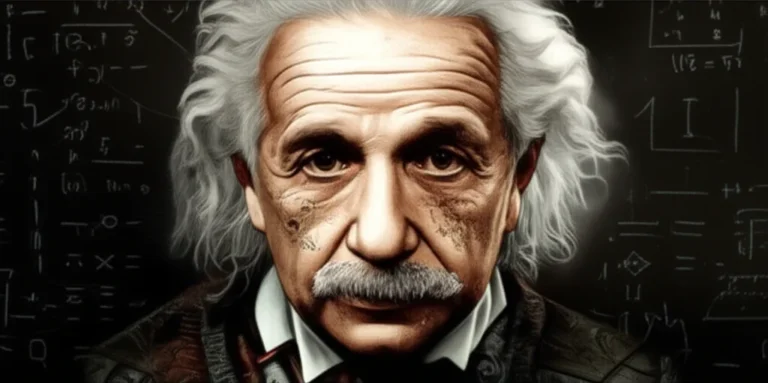
Before we dive into Einstein’s IQ, let’s take a moment to appreciate the incredible genius of this remarkable scientist. Albert Einstein was born in 1879 in Ulm, Germany. From a young age, he displayed a keen interest in mathematics and physics. His insatiable curiosity and relentless pursuit of knowledge led him to make groundbreaking discoveries that changed the course of science.
Einstein’s theory of relativity, which he developed in the early 20th century, revolutionized our understanding of space, time, and gravity. His equation, E=mc², is perhaps the most famous equation in the world and is synonymous with his name. But what about his IQ? Let’s explore!
Einstein’s IQ: The Myth and the Reality
There is a common misconception that Albert Einstein had an IQ of 160. While it is true that his intelligence was exceptional, there is no concrete evidence to support this specific IQ score. IQ tests as we know them today were not widely used during Einstein’s time, and he never took an official IQ test.
IQ, or Intelligence Quotient, is a measure of a person’s cognitive abilities compared to the general population. It is calculated based on various tests that assess different aspects of intelligence, such as logical reasoning, problem-solving, and verbal comprehension. While IQ tests can provide valuable insights into a person’s intellectual capabilities, they are not the sole determinant of intelligence.
Einstein’s brilliance went far beyond a single number on an IQ test. His ability to think creatively, his intuition, and his unique perspective on the world set him apart from his peers. He possessed a rare combination of intellectual curiosity, imagination, and perseverance, which allowed him to make groundbreaking discoveries that continue to shape our understanding of the universe.
Factors That Influence IQ
IQ is influenced by a variety of factors, including genetics, environment, education, and life experiences. While some individuals may have a natural predisposition for higher intelligence, it is important to remember that intelligence is not fixed and can be developed and nurtured throughout life.
Factors such as access to quality education, a stimulating environment, and opportunities for intellectual growth can significantly impact a person’s IQ. It is also worth noting that IQ tests measure specific cognitive abilities and may not capture the full range of a person’s intelligence, including emotional intelligence, creativity, and practical skills.
IQ Scores of Other Genius Minds
While we may never know Einstein’s exact IQ score, there are other genius minds whose IQ scores have been recorded. Here are a few notable examples:
-
Leonardo da Vinci: The Italian polymath, known for his contributions to art, science, and engineering, is believed to have had an IQ of around 180.
-
Isaac Newton: The English physicist and mathematician, famous for his laws of motion and universal gravitation, is estimated to have had an IQ of 190.
-
Stephen Hawking: The renowned theoretical physicist and cosmologist, known for his work on black holes and the nature of the universe, had an estimated IQ of 160.
-
Nikola Tesla: The Serbian-American inventor and electrical engineer, known for his contributions to the development of alternating current (AC) electrical systems, is believed to have had an IQ of 160.
While these IQ scores provide some insight into the intellectual capabilities of these individuals, it is important to remember that intelligence is multifaceted and cannot be fully captured by a single number.
FAQ

Who has 400 IQ?
There is no credible evidence to support the existence of an individual with an IQ of 400. IQ scores are typically measured on a scale where 100 is considered average. While some individuals may have exceptionally high IQ scores, reaching 400 is beyond the realm of possibility.
Read more about “The Highest IQ Score: Unlocking the Secrets of Genius …”
Who has the highest IQ in the world?
The highest recorded IQ score belongs to William James Sidis, an American child prodigy with an estimated IQ between 250 and 300. However, it is worth noting that IQ scores above 200 are highly speculative and not widely recognized.
Read more about “What Percentage of the World Has 135 IQ? … 🌍🧠”
What is Bill Gates’ IQ?
Bill Gates’ IQ score is not publicly known. While Gates is undoubtedly a highly intelligent individual, his IQ has never been officially measured or disclosed.
Read more about “What is Elon Musk’s IQ? …”
What is Elon Musk’s IQ?
Elon Musk’s IQ score is also not publicly known. Musk is known for his entrepreneurial success and innovative thinking, but his IQ has not been officially recorded.
Read more about “What is Elon Musk’s IQ?”
Conclusion

While we may never know the exact IQ score of Albert Einstein, it is clear that his intelligence was extraordinary. His contributions to science and our understanding of the universe continue to inspire and awe us. IQ scores can provide valuable insights into a person’s cognitive abilities, but they are not the sole measure of intelligence. It is important to recognize and appreciate the diverse forms of intelligence that exist in the world.
In conclusion, Albert Einstein’s genius cannot be reduced to a single number. His intellectual curiosity, creativity, and unique perspective on the world set him apart and continue to inspire generations. So, let’s celebrate the brilliance of Einstein and all the other genius minds who have shaped our world!
🔍 👉 CHECK PRICE on: Books about Albert Einstein
Recommended Links
- Free IQ Tests
- IQ Test Scores
- IQ Test Preparation
- IQ Test FAQ
- Famous IQ Scores
- What is a Good IQ Score?
Reference Links