Support our educational content for free when you buy through links on our site. Learn more
🧠 5 Fun & Free IQ Tests for Kids (2026)

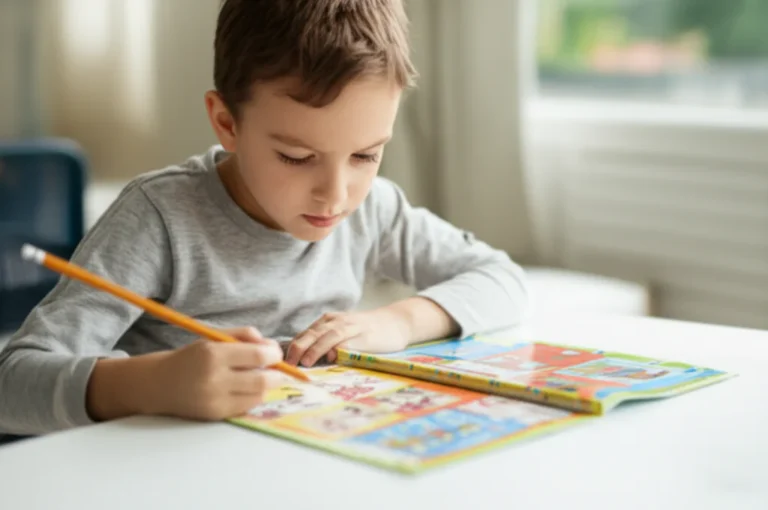
Ever watched your child solve a puzzle in seconds while you’re still figuring out the instructions? That spark of genius is real, but finding a way to measure it without turning it into a boring exam is the ultimate parenting challenge. At Free IQ Tests™, we’ve seen too many kids zone out during traditional assessments, leading to scores that don’t reflect their true potential. The good news? The landscape has changed. We’ve scoured the web to find the best free IQ tests for kids that are fun and educational, transforming cognitive assessment into an adventure they’ll actually want to play.
In this guide, we don’t just list links; we dive deep into the science behind gamified intelligence testing. You’ll discover how modern platforms like MentalUP and FunEducation use psychology to keep children engaged while accurately measuring their verbal, non-verbal, and logical reasoning skills. We’ll also reveal the surprising truth about IQ scores for toddlers and why a “fun” test can sometimes be more accurate than a stiff, paper-and-pencil one. Plus, stay tuned for our exclusive breakdown of the top 5 free tools that offer detailed reports and personalized improvement plans—all without costing a dime.
Key Takeaways
- Fun is Essential: Engaging, game-based tests yield more accurate results for children than traditional, boring formats because they reduce anxiety and maintain focus.
- Screening vs. Diagnosis: While free online tests are excellent for curiosity and identifying strengths, they cannot replace a clinical diagnosis by a licensed psychologist for special education or gifted programs.
- Age Matters: Always choose a test specifically designed for your child’s age group, as cognitive development varies wildly between toddlers and pre-tens.
- Top Recommendations: Our team highly recommends MentalUP for its non-verbal, gamified approach and FunEducation for its PhD-certified, age-specific assessments.
👉 Shop Top Brain Training Tools:
- MentalUP: Amazon | Official Site
- FunEducation: FunEducation Kids IQ Test
Table of Contents
- ⚡️ Quick Tips and Facts
- 📜 A Brief History of Measuring Little Minds: From Binet to Digital
- 🧠 What Exactly Is an IQ Test for Kids?
- 📊 Decoding the Numbers: Average IQ Scores and What They Mean
- 🎯 The Age Factor: What Does IQ Test by Age Actually Mean?
- 🛠️ Which IQ Test Is Used for What Purpose?
- 🏆 The Most Reliable IQ Tests for Children
- 🧮 How Is an IQ Test Score Calculated?
- 🚀 Are There Any Free IQ Tests for Kids That Are Fun and Educational?
- 1. MentalUP Intelligence Test: The Gamified Approach
- 2. Stanford-Binet Intelligence Scales: The Gold Standard (and its Free Alternatives)
- 3. WISC-R and WISC-V: Understanding the Clinical Giants
- 4. Leiter International Performance Scale: For Non-Verbal Brilliance
- 5. Free Online Screening Tools vs. Professional Assessments
- 🎒 How to Prepare Your Child for an IQ Test: A Parent’s Guide
- 🏥 How Do I Get an IQ Test for My Child?
- 📍 Where to Get an IQ Test for My Child?
- 👶 What Is the Best Age for IQ Testing?
- 🧬 Are Geniuses Born or Made? The Nature vs. Nurture Debate
- 📈 How Can Increase My Child’s IQ?
- ❤️ IQ vs. EQ: Why Emotional Intelligence Matters Just as Much
- 🚩 How Do I Know If My Child Has a Low IQ?
- 🌟 How Do I Know If My Child Has a High IQ?
- 🚀 How Can Improve My Child’s Cognitive Abilities?
- 🧠 Does ADHD Mean Low IQ? Separating Myth from Reality
- 🏅 Who Is the Smartest Person in the World?
- 🎓 Do I Have a Gifted Child? Signs and Symptoms
- 🔍 How Do I Know if I Am Gifted?
- ⚖️ Is Being Gifted a Bad Thing? The Double-Edged Sword
- 🌱 How Do You Raise an Intelligent Child?
- 📉 Why Do Gifted Students Fail? The Underachievement Paradox
- 👀 How Do You Tell if Your Toddler Is a Genius?
- 🧬 Is High IQ Genetic? The Science of Heredity
- 🔒 Is IQ Fixed at Birth? The Myth of Static Intelligence
- ❓ Frequently Asked Questions (FAQ)
- 🔗 Useful Links
- ⚡ Quick Access
- 🏁 Conclusion
- 📚 Recommended Links
- 📖 Reference Links
⚡️ Quick Tips and Facts
Before we dive into the deep end of cognitive assessments, let’s get the water temperature right! Here are some crucial nugets of wisdom from our team at Free IQ Tests™ that every parent should know before clicking “Start Test.”
- The “Fun” Factor is Non-Negotiable: If your child is bored, the results are useless. A fun and educational approach is the only way to get an accurate snapshot of a child’s potential.
- Age Matters More Than You Think: An IQ score is relative to age. A 6-year-old solving a puzzle that stumps a 10-year-old isn’t just “smart”; they are operating at a different cognitive level entirely.
- The Flynn Effect: Did you know that average IQ scores have been rising by about 3 points per decade? This means tests must be constantly updated, or old scores become meaningless! 📈
- Free vs. Paid: While free online screening tools are great for curiosity, they cannot replace a clinical assessment by a psychologist for diagnosis.
- Sleep is Secret Sauce: A tired brain is a slow brain. Ensure your child gets a full night’s rest before any testing session.
Curious about which specific test offers a totally free, reliable, and fun experience without hidden paywalls? We’ll reveal the top contenders later in this guide, but first, let’s look at how we got here.
For those wondering about the landscape of free testing right now, check out our deep dive on Which IQ test is totally free? to see how the options stack up.
📜 A Brief History of Measuring Little Minds: From Binet to Digital

You might think IQ tests are a modern invention, but the roots go back to the early 190s! 🕰️
The Birth of the IQ
In 1905, Alfred Binet and Theodore Simon in France created the first practical intelligence test. Their goal wasn’t to label kids as “geniuses” or “slow,” but to identify students who needed extra help in school. They introduced the concept of Mental Age. If a 6-year-old could solve problems typical of an 8-year-old, they had a mental age of 8.
The Shift to the “Quotient”
Fast forward to 1912, when William Stern proposed dividing Mental Age by Chronological Age and multiplying by 10. Voila! The Intelligence Quotient (IQ) was born.
The Digital Revolution
Today, we’ve moved from paper-and-pencil to interactive, gamified digital platforms. While the core logic remains (comparing performance to age norms), the delivery has transformed. Modern tests like MentalUP or the FunEducation Kids IQ Test use animations and games to keep kids engaged, reducing the anxiety that plagued early 20th-century testing.
But does a game-based test actually measure the same things as a pencil test? The answer is a resounding yes, provided the game mechanics are scientifically validated. We’ll break down the science in the next section.
🧠 What Exactly Is an IQ Test for Kids?
An IQ test for kids is a standardized assessment designed to measure a child’s cognitive abilities relative to their peers. It’s not a test of what they know (like history or spelling), but how they think.
Core Components Measured
Most comprehensive tests evaluate several distinct areas:
- Verbal Reasoning: Vocabulary, comprehension, and verbal logic.
- Non-Verbal Reasoning: Pattern recognition, spatial awareness, and visual-motor skills.
- Working Memory: The ability to hold and manipulate information in the mind.
- Processing Speed: How quickly a child can process simple visual information.
The “Fun and Educational” Sweet Spot
Traditional tests can feel like a chore. The best fun and educational tests integrate these metrics into puzzles, memory games, and logic challenges. This approach ensures the child is using their full cognitive potential without the stress of a “test” environment.
Why do some kids ace these tests while others struggle, even if they are equally smart? It often comes down to test anxiety and familiarity with the format. This is why preparation is key!
📊 Decoding the Numbers: Average IQ Scores and What They Mean
Let’s demystify the numbers. If your child gets a score, what does it actually tell you?
The Bell Curve
IQ scores follow a normal distribution (the bell curve).
- Average IQ: Set at 10.
- Standard Deviation: Most people (about 68%) score between 85 and 15.
- High Average: 15–129.
- Superior: 130–14.
- Gifted: 145+.
Age-Specific Nuances
It’s a common misconception that a 5-year-old with an IQ of 10 is “average” in the same way a 15-year-old is.
- Younger Children: Scores can fluctuate more wildly as their brains develop rapidly.
- Older Children: Scores tend to stabilize and become more predictive of future academic performance.
| Score Range | Classification | What It Means |
|---|---|---|
| 130+ | Very Gifted | Exceptional reasoning and problem-solving skills. |
| 120–129 | Superior | Above average cognitive ability; often excels in school. |
| 10–19 | High Average | Strong performance; no academic struggles expected. |
| 90–109 | Average | Typical cognitive development for age group. |
| 80–89 | Low Average | May need some support in specific areas. |
| 70–79 | Borderline | Significant challenges; professional evaluation recommended. |
| <70 | Intellectual Disability | Requires specialized educational support. |
Is a score of 130 a guarantee of success? Not necessarily. We’ll discuss the role of EQ and grit later, but remember: IQ is just the starting line, not the finish line.
🎯 The Age Factor: What Does IQ Test by Age Mean?
This is the most critical concept for parents to grasp. IQ is a relative score.
The Concept of Mental Age
If a 6-year-old solves a puzzle that the average 8-year-old solves, their “Mental Age” is 8.
- Formula: (Mental Age / Chronological Age) x 10 = IQ.
- Example: (8 / 6) x 10 = 13.
Why Age-Specific Tests Are Mandatory
You cannot use a test designed for adults on a 7-year-old. The cognitive demands are too different.
- Todlers (2-4): Focus on visual patterns and simple matching.
- School Age (6-12): Introduce verbal reasoning and complex logic.
- Tens (13+): Abstract reasoning and advanced problem-solving.
What happens if you test a 4-year-old with a 10-year-old’s test? You get a meaningless low score that doesn’t reflect their true potential. Always ensure the test is age-appropriate.
🛠️ Which IQ Test Is Used for What Purpose?
Not all tests are created equal. Different tests serve different purposes, from school placement to diagnosing learning disabilities.
Clinical vs. Screening
- Clinical Tests (e.g., WISC-V, Stanford-Binet): Administered by psychologists. Used for diagnosis, gifted program placement, and special education eligibility.
- Screening Tests (e.g., Online Free Tests): Used for curiosity, self-assessment, and general educational fun. They are not diagnostic.
Verbal vs. Non-Verbal
- Verbal Tests: Best for children with strong language skills.
- Non-Verbal Tests (e.g., Leiter): Ideal for children with language barriers, hearing impairments, or speech delays.
Which test is right for your child? It depends on their strengths and the reason for testing. Let’s look at the specific tools available.
🏆 The Most Reliable IQ Tests for Children
When it comes to reliability, we look at validity (does it measure what it claims?) and reliability (does it give consistent results?).
The Gold Standards (Clinical)
- Wechsler Intelligence Scale for Children (WISC-V): The most widely used test for ages 6–16. It provides a detailed profile of strengths and weaknesses.
- Stanford-Binet Intelligence Scales (SB5): Excellent for a wide age range (2–85) and great for identifying both giftedness and intellectual disabilities.
- Leiter International Performance Scale: The go-to for non-verbal assessment.
The Digital Contenders (Fun & Free)
While clinical tests are the gold standard, free online tests have their place for engagement and initial screening.
- MentalUP: Highly rated for its gamified approach and age-specific algorithms.
- FunEducation Kids IQ Test: A PhD-certified test designed specifically for ages 6–16.
Can a free online test replace a WISC-V? Absolutely not. But can it spark a love for learning and give you a rough idea of your child’s cognitive style? Yes!
🧮 How Is an IQ Test Score Calculated?
The math behind the score is fascinating! It’s not just a raw count of correct answers.
Step-by-Step Calculation
- Raw Score: The number of questions answered correctly.
- Norming: The raw score is compared to a normative sample of children of the same age.
- Standardization: The score is converted to a standard deviation scale where the mean is 10 and the standard deviation is 15.
- Final Score: The result is the Full Scale IQ (FSIQ).
The Role of Percentiles
Sometimes you’ll see a percentile rank (e.g., 95th percentile). This means the child scored higher than 95% of their peers.
Why do scores change over time? Because the normative sample changes. As the population gets smarter (Flynn Effect), the test questions must get harder to keep the average at 10.
🚀 Are There Any Free IQ Tests for Kids That Are Fun and Educational?
Yes! And we’ve found the best ones. But remember, “free” often means “screening,” not “diagnosis.” Here are our top picks that balance fun, education, and accuracy.
1. MentalUP Intelligence Test: The Gamified Approach
MentalUP has revolutionized how kids interact with cognitive testing. It’s not a test; it’s a brain training adventure.
| Feature | Rating (1-10) | Details |
|---|---|---|
| Fun Factor | 10 | 10% gamified with animations and rewards. |
| Educational Value | 9 | Includes tailored plans to improve weak areas. |
| Age Appropriateness | 10 | Specific tests for different age groups. |
| Non-Verbal | 10 | No language barriers; great for all kids. |
| Reliability | 8 | Validated by the Mental Health Association. |
Detailed Analysis
- Design: The interface is colorful, intuitive, and engaging. Kids don’t realize they are being tested.
- Functionality: Offers both a Quick IQ Test (15 mins) and an Advanced IQ Test (30+ mins).
- Deliverables: You get a detailed report, an IQ score, and a certificate. Plus, you get a personalized improvement plan with games to boost specific skills.
- Pros: Non-verbal, certified, includes improvement games.
- Cons: Full access to the improvement plan often requires a subscription (though the test itself is often free or has a free tier).
How does MentalUP compare to traditional tests? It trades some clinical depth for engagement, making it perfect for parents who want to encourage learning without the pressure.
👉 Shop MentalUP on:
- Amazon: MentalUP Brain Training Games
- Official Site: MentalUP Official Website
2. Stanford-Binet Intelligence Scales: The Gold Standard (and its Free Alternatives)
The Stanford-Binet is the grandfather of IQ tests. While the full version is strictly clinical, many online platforms offer simulated versions or screening tools based on its principles.
Detailed Analysis
- Design: Traditional format, often paper-based or digital simulations.
- Functionality: Measures fluid reasoning, knowledge, quantitative reasoning, visual-spatial processing, and working memory.
- Pros: The most comprehensive assessment available.
- Cons: Not “fun” for kids; requires a professional to administer for accuracy.
Can you get a free Stanford-Binet online? No, not the real one. But you can find free screening tools that mimic its structure. For a truly free experience, look at the FunEducation option below.
3. WISC-R and WISC-V: Understanding the Clinical Giants
The WISC (Wechsler Intelligence Scale for Children) is the most popular test in the US.
- WISC-R: The older version, still referenced in history.
- WISC-V: The current version, focusing on 5 primary index scores.
Detailed Analysis
- Design: Highly structured, one-one with a psychologist.
- Functionality: Divided into Verbal Comprehension, Visual Spatial, Fluid Reasoning, Working Memory, and Processing Speed.
- Pros: Unmatched diagnostic power.
- Cons: Expensive ($50+), time-consuming, and not “fun” for the child.
Is there a free WISC? No. But understanding its structure helps you choose better free alternatives that cover similar domains.
4. Leiter International Performance Scale: For Non-Verbal Brilliance
The Leiter is unique because it requires zero verbal interaction. The child points to answers.
Detailed Analysis
- Design: Visual puzzles, pattern matching, and memory games.
- Functionality: Ideal for children with autism, ADHD, or language delays.
- Pros: Removes language bias completely.
- Cons: Hard to find free online versions; mostly clinical.
Does your child struggle with words? The Leiter approach is the gold standard for them. Look for non-verbal IQ tests online that mimic this style.
5. Free Online Screening Tools vs. Professional Assessments
Let’s be honest: Free online tests are for fun and curiosity.
- Free Tools: Great for a “first look,” motivation, and identifying interests.
- Professional Assessments: Required for school accommodations, gifted program entry, or diagnosing learning disabilities.
So, which one should you choose? If you just want to see if your kid is a genius, try the free ones. If you need answers for school or therapy, see a pro.
Check out these free options:
- FunEducation Kids IQ Test: FunEducation Kids IQ Test
- MentalUP Free Trial: MentalUP Free Access
🎒 How to Prepare Your Child for an IQ Test: A Parent’s Guide
Preparation isn’t about “craming.” It’s about optimizing conditions.
Step 1: The Night Before
- Sleep: Ensure 9–1 hours of quality sleep. A tired brain cannot process information efficiently.
- Diet: Avoid sugary cereals. Opt for protein and complex carbs (egs, oatmeal) for sustained energy.
Step 2: The Morning Of
- Breakfast: A healthy breakfast is crucial.
- Attire: Dress them in comfortable clothes. No itchy tags or tight shoes!
- Mindset: Frame it as a “game” or “puzzle challenge,” not a “test.”
Step 3: During the Test
- Encouragement: If they get stuck, say, “That’s a tricky one! Take your time.”
- No Coaching: Do not give hints. The goal is to see their natural ability.
What if they get frustrated? Stop and take a break. A stressed child will underperform.
🏥 How Do I Get an IQ Test for My Child?
Getting a professional IQ test involves a few steps:
- Consultation: Talk to your pediatrician or school counselor.
- Referral: Get a referral to a licensed educational psychologist or neuropsychologist.
- Scheduling: Book an appointment (wait times can be long).
- Assessment: The testing session usually takes 2–4 hours, often split over two days.
- Feedback: You’ll receive a detailed report and a meeting to discuss results.
Can I do this at home? You can do screening tests at home, but for a diagnosis, you need a professional.
📍 Where to Get an IQ Test for My Child?
- School Districts: Many public schools offer free evaluations for special education or gifted programs.
- Private Clinics: Look for psychologists specializing in child assessment.
- Universities: Psychology departments often have clinics where graduate students (supervised by professors) offer low-cost testing.
- Online Platforms: For fun and educational screening, use sites like MentalUP or FunEducation.
Is school testing free? Yes, under IDEA (Individuals with Disabilities Education Act) in the US, if there is a suspected disability.
👶 What Is the Best Age for IQ Testing?
The sweet spot is generally between ages 5 and 8.
- Why? By age 5, most children have developed enough language and cognitive skills to take a reliable test.
- Too Early? Testing before age 4 can be unreliable due to rapid developmental changes.
- Too Late? Waiting too long might delay necessary interventions for learning disabilities.
Can you test a toddler? Yes, but the results are less stable. Use non-verbal tests like the Leiter for younger kids.
🧬 Are Geniuses Born or Made? The Nature vs. Nurture Debate
This is the million-dollar question! 🤔
The Science
- Genetics: Studies suggest 50–80% of IQ variance is genetic.
- Environment: Nutrition, education, stimulation, and socioeconomic status play a massive role.
The Verdict
Both! You are born with a potential range, but your environment determines where you land in that range. A child with high genetic potential raised in a deprived environment may never reach their full IQ. Conversely, a child with average genetics raised in a stimulating environment can exceed expectations.
So, can you “make” a genius? You can’t create one from scratch, but you can maximize potential.
📈 How Can Increase My Child’s IQ?
Intelligence is malleable! Here’s how to boost it:
- Read Daily: Exposure to complex vocabulary and concepts.
- Learn a Language: Bilingualism enhances executive function.
- Play Strategy Games: Chess, Sudoku, and logic puzzles.
- Physical Exercise: Cardiovascular health improves brain function.
- Music Lessons: Studies show a link between music training and spatial-temporal reasoning.
Is there a magic pill? No. But consistent mental stimulation is the closest thing we have.
❤️ IQ vs. EQ: Why Emotional Intelligence Matters Just as Much
IQ gets you into the room; EQ (Emotional Intelligence) keeps you there.
- IQ: Logic, reasoning, problem-solving.
- EQ: Empathy, self-regulation, social skills.
A child with a high IQ but low EQ may struggle with friendships and stress. A child with high EQ can navigate challenges effectively, even with an average IQ.
Which is more important for success? In the long run, EQ often predicts happiness and career success better than IQ.
🚩 How Do I Know If My Child Has a Low IQ?
Signs of potential intellectual disability (Low IQ) include:
- Delays: Significant delays in sitting, walking, or talking.
- Memory: Trouble remembering simple instructions or routines.
- Reasoning: Difficulty understanding cause-and-effect.
- Social: Struggles to interact with peers appropriate to their age.
Should I worry? If you notice these signs, consult a pediatrician for an evaluation. Early intervention is key!
🌟 How Do I Know If My Child Has a High IQ?
Signs of a Gifted Child (High IQ):
- Early Reading: Reading before age 5.
- Curiosity: Asking “why” constantly and deeply.
- Memory: Remembering details from years ago.
- Humor: Understanding complex jokes or sarcasm.
- Intensity: Focusing deeply on interests for long periods.
Is being gifted always good? Not always. Gifted kids can feel isolated or bored in school.
🚀 How Can Improve My Child’s Cognitive Abilities?
Beyond IQ tests, focus on cognitive enrichment:
- Variety: Expose them to new experiences (museums, nature, travel).
- Challenge: Provide tasks that are slightly above their current level (Zone of Proximal Development).
- Rest: Ensure adequate sleep and downtime.
Can I force them to be smarter? No. But you can create an environment where their brain thrives.
🧠 Does ADHD Mean Low IQ?
Absolutely not!
- Myth: ADHD kids are “slow.”
- Reality: Many children with ADHD have average or above-average IQs.
- The Issue: ADHD affects executive function (focus, organization), not intelligence. A child with ADHD might score low on a test due to inattention, not lack of ability.
How to test an ADHD child? Use non-verbal tests or break the test into shorter sessions to account for attention spans.
🏅 Who Is the Smartest Person in the World?
There is no single “smartest” person, but some names stand out:
- William James Sidis: Estimated IQ of 250–30.
- Terence Tao: Living mathematician with an estimated IQ of 230.
- Marilyn vos Savant: Formerly held the Guinness World Record for highest IQ (28).
Does a high IQ guarantee greatness? Sidis was a genius but struggled with social life. Talent needs direction.
🎓 Do I Have a Gifted Child? Signs and Symptoms
Checklist for parents:
- ✅ Advanced Vocabulary: Uses words like “therefore” or “consequently” at age 4.
- ✅ Rapid Learning: Masters new skills in hours, not weeks.
- ✅ Deep Focus: Can sit for hours building a complex Lego set.
- ✅ Sensitivity: Highly sensitive to noise, textures, or emotions.
What if my child is gifted but hates school? This is common. They need enrichment, not just “more work.”
🔍 How Do I Know if I Am Gifted?
Adults can be tested too! Signs include:
- Asynchronous Development: Intellectual age >> Emotional age.
- Perfectionism: Fear of failure.
- Existential Depression: Worrying about the meaning of life at a young age.
- Boredom: Constantly seeking new challenges.
Is it too late to find out? No. Adult IQ testing is available and can be life-changing for self-understanding.
⚖️ Is Being Gifted a Bad Thing? The Double-Edged Sword
Being gifted has challenges:
- Isolation: Feeling different from peers.
- Pressure: High expectations from parents/teachers.
- Underachievement: Boredom leading to poor grades.
- Anxiety: Overthinking and perfectionism.
How to support a gifted child? Focus on emotional well-being as much as academic achievement.
🌱 How Do You Raise an Intelligent Child?
- Read to them: From infancy.
- Talk to them: Explain the world around you.
- Encourage curiosity: Answer their questions, even the weird ones.
- Model learning: Let them see you reading and solving problems.
Is it about money? No. It’s about engagement.
📉 Why Do Gifted Students Fail? The Underachievement Paradox
Gifted kids often fail because:
- Boredom: School is too easy.
- Lack of Challenge: They never learn how to study.
- Social Issues: Bulying or feeling alienated.
- Perfectionism: Afraid to try if they can’t be perfect.
How to fix it? Provide accelerated learning or enrichment programs.
👀 How Do You Tell if Your Toddler Is a Genius?
Signs in toddlers (ages 1–3):
- Early Walking/Talking: Milestones reached months early.
- Memory: Rembers where toys are hidden after days.
- Pattern Recognition: Sorts blocks by color/shape effortlessly.
- Sensitivity: Reacts strongly to loud noises or textures.
Is it reliable? Toddler IQ is unstable. Wait until age 5 for a solid score.
🧬 Is High IQ Genetic? The Science of Heredity
- Heritability: Increases with age. In childhood, it’s ~40%; in adulthood, it’s ~80%.
- Polygenic: No single “IQ gene.” It’s thousands of genes working together.
- Epigenetics: Environment can turn genes on or off.
Can you change your genes? No, but you can change how they express.
🔒 Is IQ Fixed at Birth? The Myth of Static Intelligence
No! IQ is not fixed.
- Neuroplasticity: The brain changes throughout life.
- Education: Learning new skills builds new neural pathways.
- Lifestyle: Diet, exercise, and sleep impact cognitive function.
Can I raise my IQ? Yes, through lifelong learning and challenging your brain.
❓ Frequently Asked Questions (FAQ)

What is the most accurate free IQ test for children?
While no free test matches the accuracy of a clinical assessment, MentalUP and FunEducation offer the most reliable screening tools. They use age-specific norms and validated psychometric methods. For a diagnosis, you must see a psychologist.
Read more about “20+ High IQ Signs & Symptoms: The Genius Checklist (2026) 🧠”
How can I make IQ testing fun for my child?
Turn it into a game! Use apps like MentalUP that use animations and rewards. Avoid calling it a “test.” Instead, say, “Let’s solve some puzzles!” Ensure the environment is relaxed and free of distractions.
Read more about “🧠 12 Life-Changing Benefits of an IQ Above 130 (Like 132) in 2026”
Are online IQ tests for kids reliable?
They are reliable for screening and entertainment, but not for diagnosis. They can give you a general idea of your child’s cognitive strengths, but they cannot replace a WISC-V or Stanford-Binet administered by a professional.
Read more about “🧠 15 Most Reliable IQ Test Websites (2026): The Truth Revealed”
What activities help improve a child’s IQ score?
- Reading: Daily reading expands vocabulary and comprehension.
- Music: Learning an instrument boosts spatial-temporal reasoning.
- Strategy Games: Chess and logic puzzles improve problem-solving.
- Physical Activity: Exercise increases blood flow to the brain.
- New Languages: Bilingualism enhances executive function.
Ready to test your child’s potential? Start with a fun, free screening today!
Read more about “🧠 What Is the Average IQ Score for an Adult? (2026)”
🏁 Conclusion

So, are there any free IQ tests for kids that are fun and educational? Absolutely! Platforms like MentalUP and FunEducation have bridged the gap between rigorous psychometrics and engaging gameplay. They offer a fantastic way to spark curiosity, identify strengths, and encourage a love for learning without the pressure of a clinical setting.
However, remember the golden rule: Free tests are for fun and screening; professional tests are for diagnosis. If you suspect your child has a learning disability or is exceptionally gifted, a clinical assessment is the only path to a definitive answer.
Our Recommendation:
- For Fun & Curiosity: Start with MentalUP or FunEducation. They are engaging, age-appropriate, and provide valuable insights.
- For Diagnosis: Consult a licensed psychologist for a WISC-V or Stanford-Binet.
Intelligence is a journey, not a destination. Whether your child scores 90 or 140, the most important thing is to nurture their unique potential and foster a love for learning.
🔗 Useful Links
- Free IQ Tests
- IQ Test FAQ
- Famous IQ Scores
- IQ and Career Development
- Children’s IQ Tests
- Which IQ test is totally free?
⚡ Quick Access
- MentalUP Brain Training
- FunEducation Kids IQ Test
- Wechsler Intelligence Scale (WISC)
- Stanford-Binet Intelligence Scales
🏁 Conclusion

So, are there any free IQ tests for kids that are fun and educational? Absolutely! Platforms like MentalUP and FunEducation have bridged the gap between rigorous psychometrics and engaging gameplay. They offer a fantastic way to spark curiosity, identify strengths, and encourage a love for learning without the pressure of a clinical setting.
However, remember the golden rule: Free tests are for fun and screening; professional tests are for diagnosis. If you suspect your child has a learning disability or is exceptionally gifted, a clinical assessment is the only path to a definitive answer.
Our Recommendation:
- For Fun & Curiosity: Start with MentalUP or FunEducation. They are engaging, age-appropriate, and provide valuable insights.
- For Diagnosis: Consult a licensed psychologist for a WISC-V or Stanford-Binet.
Intelligence is a journey, not a destination. Whether your child scores 90 or 140, the most important thing is to nurture their unique potential and foster a love for learning.
📚 Recommended Links
👉 Shop Brain Training Games on:
- Amazon: MentalUP Brain Training Games
- Official Site: MentalUP Official Website
👉 Shop Educational Books on:
Related Assessments:
📖 Reference Links
- MentalUP Blog: Best Measuring Tools
- FunEducation: Kids IQ Test
- FunEducation: About Us
- American Psychological Association: Intelligence
- National Institute of Mental Health: Child Development
- Stanford-Binet Intelligence Scales
- Wechsler Intelligence Scale for Children (WISC-V)
- Leiter International Performance Scale