Support our educational content for free when you buy through links on our site. Learn more
10 Surprising Traits of Someone with a High IQ Like 132 🧠 (2026)

Ever wondered what sets apart someone with a high IQ score—say, around 132—from the rest of the crowd? Spoiler alert: it’s not just about solving complex math problems or having a photographic memory. At Free IQ Tests™, we’ve uncovered a fascinating blend of traits that define these intellectually gifted individuals. From rapid learning and intense curiosity to unexpected emotional sensitivities and social quirks, the picture is far more nuanced than you might think.
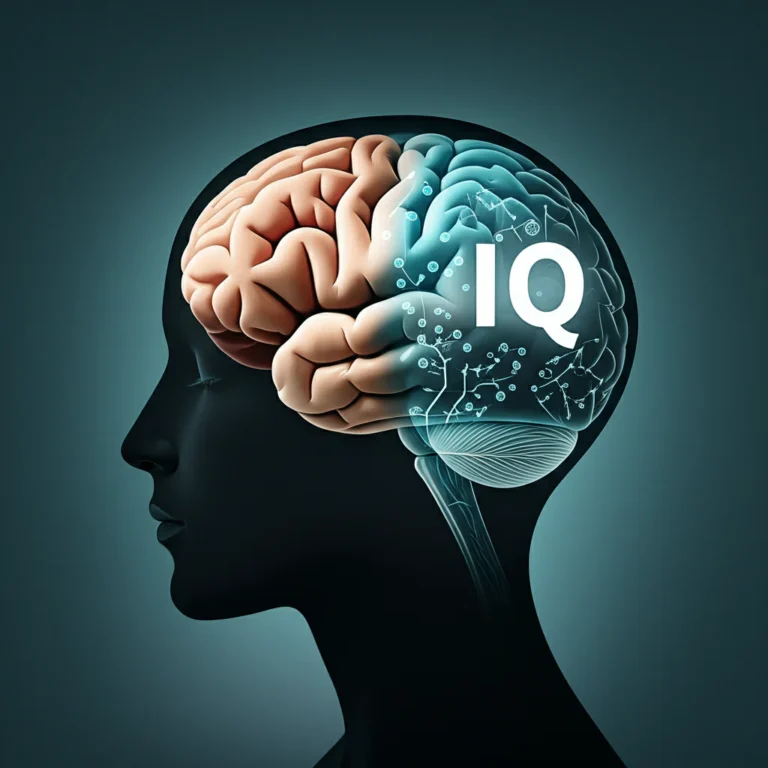
Did you know that an IQ of 132 places you in the top 2% of the population, often qualifying for elite groups like Mensa? But here’s the twist: while high IQ opens doors to extraordinary cognitive abilities, it can also bring unique challenges like overthinking and social isolation. Stick around, because later we’ll dive into how you can leverage these traits for success and even explore how to boost your cognitive edge!
Key Takeaways
- An IQ of 132 signifies “Very Superior” intelligence, placing you among the intellectual elite.
- People with high IQs often exhibit rapid learning, strong problem-solving skills, and deep curiosity.
- High IQ is linked with both creativity and emotional sensitivity, which can be a double-edged sword.
- IQ tests measure cognitive ability but don’t capture emotional intelligence, motivation, or social skills.
- While your baseline IQ is stable, brain training and lifelong learning can enhance cognitive performance.
- Understanding and managing common challenges like overthinking and social isolation is key to thriving.
Ready to unlock the secrets behind a high IQ like 132? Let’s dive in!
Table of Contents
- ⚡️ Quick Tips and Facts About High IQ Individuals
- 🧠 Decoding IQ Scores: What Does a 132 IQ Really Mean?
- 📏 How IQ Tests Measure Intelligence: Methods and Metrics
- ❌ What IQ Scores Don’t Tell You: The Limits of Intelligence Testing
- 🧬 The Science and History Behind IQ Testing: From Binet to Modern Day
- 🔍 10 Key Characteristics of People with High IQs (Including 132 and Above)
- 🧩 How High IQ Affects Creativity, Problem Solving, and Emotional Intelligence
- 📚 Can You Boost Your IQ? Effective Strategies and Brain Training Tips
- 🧑🏫 Famous People with IQs Around 130-140: Inspiration and Anecdotes
- 💡 How to Leverage a High IQ in Everyday Life and Career Success
- 🤔 Common Misconceptions About High IQ People Debunked
- 📊 IQ vs Other Types of Intelligence: Emotional, Social, and Practical IQ
- 🧠 Brain Facts: What Neuroscience Says About High IQ Brains
- 🎯 Takeaway: What Having an IQ of 132 Means for You
- 👍 Was This Article Helpful? Your Feedback Matters!
- 📚 Recommended Links for Further Reading on IQ and Intelligence
- ❓ FAQ: Your Burning Questions About High IQ Answered
- 🔗 Reference Links and Credible Sources
⚡️ Quick Tips and Facts About High IQ Individuals
Welcome to the fascinating world of high IQs! If you’re wondering what are the characteristics of someone with a high IQ, such as 132, you’re in the right place. At Free IQ Tests™, we’ve seen thousands of test-takers, and here’s a quick snapshot to whet your appetite:
- IQ 132+ places you in the top 2% of the population, often qualifying for elite groups like Mensa. Is 132 IQ good?
- High IQ individuals tend to have excellent problem-solving skills, rapid learning ability, and strong abstract reasoning.
- They often show intense curiosity and deep focus on complex topics.
- But beware: high IQ can come with overthinking, social isolation, and even mental health challenges.
- IQ is stable over time but can be slightly improved with practice and brain training.
Here’s a quick fact table to get you started:
| Fact | Detail | Source |
|---|---|---|
| Average IQ | 100 | Healthline |
| High IQ Threshold | 130+ (top 2%) | Mensa |
| IQ 132 Classification | Very Superior / Gifted | Wikipedia |
| Mental Health Correlation | Higher rates of anxiety and mood disorders | Hanley Center |
| IQ Stability | Scores consistent from childhood to adulthood | Healthline |
Curious how all this plays out in real life? Keep reading!
🧠 Decoding IQ Scores: What Does a 132 IQ Really Mean?
Let’s demystify the number 132. You might have heard it’s “high,” but what does that actually mean?
132 IQ is classified as “Very Superior” intelligence, placing you comfortably in the top 2% of the population — the same bracket that qualifies you for Mensa membership. This means you’re likely to:
- Grasp complex concepts quickly
- Solve problems with ease
- Think abstractly and creatively
- Learn new skills faster than most
But it’s not just about raw smarts. According to Wikipedia’s IQ classification, a 132 IQ score is a statistical marker, not a guarantee of genius-level achievement. It’s a measure of potential, not destiny.
Here’s a quick comparison of IQ ranges:
| IQ Range | Classification | Approximate % of Population |
|---|---|---|
| 130+ | Very Superior | Top 2% |
| 120–129 | Superior | ~7% |
| 110–119 | High Average | ~16% |
| 90–109 | Average | ~50% |
| Below 90 | Below Average | ~25% |
So, if you have an IQ of 132, you’re in elite company — but remember, IQ is just one piece of the puzzle.
📏 How IQ Tests Measure Intelligence: Methods and Metrics
You might wonder, how do IQ tests actually measure intelligence? It’s more than just vocabulary or math skills.
IQ tests assess several cognitive domains:
- Verbal comprehension: Understanding and using language
- Working memory: Holding and manipulating information
- Processing speed: How quickly you process simple information
- Perceptual reasoning: Solving puzzles and recognizing patterns
- Logical reasoning: Deductive and inductive thinking
Popular tests like the Wechsler Adult Intelligence Scale (WAIS) and the Stanford-Binet test combine these areas into a composite IQ score.
Step-by-step, here’s what happens during a test:
- Baseline assessment: Simple questions to gauge starting level
- Timed tasks: Speed and accuracy are measured
- Problem-solving: Puzzles and logic problems test reasoning
- Memory challenges: Recalling sequences or details
- Verbal tasks: Vocabulary, comprehension, and analogies
The test results are then normalized against a large sample of people your age, so your score reflects how you compare to peers.
Important: Only professionally administered IQ tests are reliable. Online quizzes can be fun but are not accurate indicators of your true IQ. For a trustworthy test, check out our Free IQ Tests section.
❌ What IQ Scores Don’t Tell You: The Limits of Intelligence Testing
Here’s a reality check: IQ scores are not the final word on your intelligence or potential.
What IQ tests don’t measure:
- Emotional intelligence (EQ): Your ability to understand and manage emotions
- Creativity: Thinking outside the box and innovating
- Motivation and grit: Persistence often trumps raw smarts
- Social skills: Communication and relationship-building
- Practical intelligence: Street smarts and real-world problem solving
Moreover, IQ tests can be influenced by:
- Test anxiety or fatigue
- Cultural and language biases
- Educational background
- Health and nutrition at the time of testing
For example, a high IQ individual might struggle socially or emotionally, while someone with an average IQ might excel in leadership or creativity.
At Free IQ Tests™, we emphasize that IQ is a useful tool but not a definitive measure of your worth or capabilities. For more on this, see our IQ Test FAQ.
🧬 The Science and History Behind IQ Testing: From Binet to Modern Day
IQ testing has a rich history dating back over a century.
- 1905: French psychologist Alfred Binet developed the first practical intelligence test to identify children needing educational support.
- 1916: Lewis Terman adapted Binet’s test into the Stanford-Binet Intelligence Scale, popularizing IQ testing in the U.S.
- 1939: David Wechsler introduced the WAIS, which remains a gold standard today.
- Modern tests incorporate computerized adaptive testing and measure multiple cognitive domains.
Why was IQ testing developed? To provide an objective measure of intellectual ability, but over time, it’s been used for everything from educational placement to job screening.
Controversies and evolution:
- Early tests were criticized for cultural bias and misuse.
- Modern tests strive to be more culturally fair and comprehensive.
- Neuroscience now explores the biological basis of intelligence, linking IQ to brain structure and function.
For a fascinating dive into IQ history and science, check out this detailed overview.
🔍 10 Key Characteristics of People with High IQs (Including 132 and Above)
Ready for the juicy part? Here are 10 traits commonly observed in people with IQs around 132 and higher — based on research, expert observations, and our experience at Free IQ Tests™:
- Rapid Learning Ability: They pick up new concepts and skills faster than average.
- Strong Problem-Solving Skills: They excel at puzzles, logic, and abstract reasoning.
- Curiosity and Deep Focus: High IQ individuals often dive deeply into subjects they love.
- Excellent Memory: Both working and long-term memory tend to be strong.
- High Verbal Skills: They often have a rich vocabulary and articulate thoughts clearly.
- Creative Thinking: They can connect ideas in novel ways, fueling innovation.
- Sensitivity and Emotional Depth: Many are more emotionally aware and empathetic.
- Tendency to Overthink: This can lead to rumination or anxiety (see mental health section).
- Social Challenges: Sometimes, they feel isolated or misunderstood by peers.
- Strong Sense of Justice: Many have a keen awareness of fairness and ethics.
Table: Characteristics Summary
| Characteristic | Description | Potential Drawback |
|---|---|---|
| Rapid Learning | Quick grasp of new info | May get bored with repetition |
| Problem Solving | Logical and abstract reasoning | Can overanalyze simple issues |
| Curiosity | Deep interest in complex topics | May neglect social interactions |
| Memory | Strong recall abilities | May obsess over details |
| Verbal Skills | Articulate and expressive | Can dominate conversations |
| Creativity | Innovative and original thinking | Sometimes impractical ideas |
| Emotional Sensitivity | Empathetic and aware of feelings | Vulnerable to emotional overwhelm |
| Overthinking | Analytical to a fault | Anxiety, indecision |
| Social Challenges | May feel isolated | Difficulty connecting with others |
| Sense of Justice | Strong ethical compass | Can be rigid or judgmental |
These traits paint a complex picture — high IQ is a gift and a challenge.
🧩 How High IQ Affects Creativity, Problem Solving, and Emotional Intelligence
You might think high IQ means just being good at math or logic — but it’s much richer than that.
Creativity and IQ
- Research shows a positive correlation between IQ and creativity up to a point (around 120-130 IQ). Beyond that, creativity depends more on personality traits and environment.
- High IQ individuals often generate original ideas but need motivation and openness to realize creative potential.
Problem Solving
- High IQ people excel at complex problem solving, especially in abstract or unfamiliar domains.
- They can see patterns others miss and devise innovative solutions quickly.
Emotional Intelligence (EQ)
- Interestingly, high IQ does not guarantee high EQ. Some highly intelligent people have average or below-average emotional skills.
- However, many with high IQ also show heightened emotional sensitivity, which can be a double-edged sword: empathy and insight vs. vulnerability to stress.
Mental Health Note: Studies (like the one from Hanley Center) indicate that people with IQs around 132 may experience higher rates of anxiety and mood disorders, possibly due to overexcitability and rumination.
📚 Can You Boost Your IQ? Effective Strategies and Brain Training Tips
Good news: while your baseline IQ is largely genetic and stable, you can improve your cognitive performance and test results with the right habits.
Proven ways to sharpen your mind:
- Lifelong Learning: Keep challenging your brain with new skills, languages, or hobbies.
- Brain Training Apps: Tools like Lumosity, Peak, and BrainHQ offer exercises targeting memory, attention, and problem-solving.
- Physical Exercise: Aerobic workouts improve blood flow to the brain and boost neurogenesis.
- Healthy Nutrition: Omega-3 fatty acids, antioxidants, and balanced diets support brain health.
- Adequate Sleep: Sleep consolidates memory and cognitive function.
- Mindfulness and Meditation: Reduce stress and improve focus.
- Social Interaction: Engaging conversations and teamwork stimulate cognitive flexibility.
What doesn’t work: There’s no magic pill or quick fix. Some “brain training” claims are exaggerated or unsupported by science.
Step-by-step to improve IQ test performance:
- Practice sample IQ tests to familiarize yourself with question types.
- Work on speed and accuracy under timed conditions.
- Improve vocabulary and math basics.
- Develop test-taking strategies: skip hard questions, manage time.
- Maintain physical and mental health leading up to the test.
For free practice tests and tips, visit our Free IQ Tests page.
🧑🏫 Famous People with IQs Around 130-140: Inspiration and Anecdotes
Wonder who shares your IQ range? Here are some inspiring figures reputed to have IQs around 130-140:
| Name | IQ Estimate | Notable For |
|---|---|---|
| Bill Gates | ~135 | Microsoft co-founder, philanthropist |
| Stephen Hawking | ~160 | Theoretical physicist (above 130 but close) |
| Elon Musk | ~138 | Entrepreneur, SpaceX, Tesla |
| Emma Watson | ~138 | Actress, activist |
| Mark Zuckerberg | ~152 | Facebook founder (slightly higher) |
These individuals demonstrate that high IQ can fuel innovation, leadership, and creativity — but it’s their drive and vision that truly made them legends.
Personal story: One of our Free IQ Tests™ educators scored 134 and found that while the IQ opened doors, it was persistence and emotional resilience that helped build a fulfilling career.
💡 How to Leverage a High IQ in Everyday Life and Career Success
Having a high IQ like 132 is a fantastic asset — but how do you make the most of it?
Tips to leverage your IQ effectively:
- Choose intellectually stimulating careers: fields like research, engineering, law, or entrepreneurship.
- Practice emotional intelligence: build strong relationships and communication skills.
- Stay humble and curious: high IQ is a tool, not a trophy.
- Manage overthinking: develop mindfulness or cognitive-behavioral techniques to reduce rumination.
- Network with diverse people: avoid social isolation and broaden perspectives.
- Keep learning: never stop challenging your brain.
Career success is multifaceted: IQ helps, but motivation, social skills, and opportunity matter just as much. For career advice tailored to high IQ individuals, check out our IQ and Career Development resources.
🤔 Common Misconceptions About High IQ People Debunked
Let’s bust some myths about high IQ folks:
- Myth 1: High IQ means you’re a genius at everything.
❌ Reality: IQ measures specific cognitive skills, not all talents or knowledge. - Myth 2: High IQ people are socially awkward or antisocial.
❌ Reality: Social skills vary widely; many high IQ individuals are charismatic and empathetic. - Myth 3: IQ is fixed and cannot be improved.
❌ Reality: While baseline IQ is stable, cognitive performance and test skills can improve. - Myth 4: High IQ guarantees success and happiness.
❌ Reality: Success depends on many factors beyond IQ, including emotional health and opportunity. - Myth 5: IQ tests are culturally biased and meaningless.
✅ Partially true: Some tests have biases, but modern tests strive for fairness and are useful tools when interpreted properly.
Understanding these myths helps you appreciate the complexity behind the IQ number.
📊 IQ vs Other Types of Intelligence: Emotional, Social, and Practical IQ
IQ is just one form of intelligence. Let’s compare:
| Intelligence Type | Description | Importance |
|---|---|---|
| IQ (Cognitive) | Logical reasoning, problem-solving, memory | Academic and technical success |
| Emotional IQ (EQ) | Recognizing and managing emotions | Relationships, leadership, mental health |
| Social IQ | Navigating social situations and networks | Collaboration, influence |
| Practical IQ | Everyday problem-solving and adaptability | Real-world success and resilience |
Many high IQ individuals benefit from developing their EQ and social skills to complement their cognitive strengths.
🧠 Brain Facts: What Neuroscience Says About High IQ Brains
Neuroscience offers fascinating insights into what makes a high IQ brain tick:
- Brain size and structure: Studies show a modest correlation between IQ and overall brain volume, especially in the prefrontal cortex.
- Neural efficiency: High IQ brains tend to use less energy for cognitive tasks, showing more efficient neural pathways.
- Axon thickness: As highlighted in the featured video, thicker axons allow faster signal transmission, speeding up processing.
- Connectivity: Better communication between brain regions supports complex thinking.
- Plasticity: High IQ individuals may have greater neural plasticity, aiding learning and adaptation.
Fun fact: People with higher IQs tend to have faster simple reflexes and are less sensitive to disgust, according to recent research.
🎯 Takeaway: What Having an IQ of 132 Means for You
So, what’s the bottom line? Having an IQ of 132 means you’re intellectually gifted, with strong reasoning, learning, and problem-solving abilities. You’re in a rare group that can unlock complex ideas and innovate.
But remember:
- IQ is not a guarantee of success or happiness.
- Emotional health, motivation, and social skills are equally important.
- You might face challenges like overthinking or social isolation.
- You can improve your cognitive skills and leverage your IQ for a fulfilling life.
At Free IQ Tests™, we encourage you to embrace your strengths, work on your weaknesses, and keep growing.
👍 Was This Article Helpful? Your Feedback Matters!
We hope this deep dive into the characteristics of someone with a high IQ, such as 132, has enlightened and entertained you! Your feedback helps us improve and create content tailored to your curiosity.
- Did you find the explanations clear and useful?
- What topics would you like us to explore next?
- Have you taken an IQ test recently? Share your experience!
Drop us a comment or reach out on our social channels. And if you want to test your IQ or learn more, check out our Free IQ Tests and IQ Test FAQ pages.
📚 Recommended Links for Further Reading on IQ and Intelligence
For those hungry for more knowledge, here are some trusted resources:
- Mensa International — Official site for high IQ society membership and info
- American Psychological Association: Intelligence — Research and articles on IQ science
- Healthline: What Is Considered a High IQ? — Clear overview of IQ ranges and implications
- Hanley Center: Mental Health and High IQ — Insightful article on mental health risks for high IQ individuals
- Free IQ Tests™ Famous IQ Scores — Profiles of notable high IQ individuals
- Free IQ Tests™ IQ and Career Development — Tips for leveraging IQ in your career
❓ FAQ: Your Burning Questions About High IQ Answered
Q: Is an IQ of 132 considered genius level?
A: Not quite “genius” by strict definitions (usually 140+), but definitely “very superior” intelligence and in the top 2%.
Q: Can IQ change over time?
A: Your baseline IQ is mostly stable, but test scores can vary slightly with practice, health, and age.
Q: Does a high IQ guarantee success?
A: No. Success depends on many factors including motivation, emotional intelligence, and opportunity.
Q: Are high IQ people more prone to mental illness?
A: Studies suggest higher rates of anxiety and mood disorders among high IQ individuals, possibly due to overexcitability and rumination.
Q: How can I improve my IQ score?
A: Practice IQ tests, maintain brain-healthy habits, and engage in lifelong learning.
For more FAQs, visit our IQ Test FAQ.
🔗 Reference Links and Credible Sources
- Healthline: What Is Considered a High IQ?
- Hanley Center: Why Are Intelligent People More Prone to Mental Illness?
- Wikipedia: IQ Classification
- American Psychological Association: Intelligence
- Mensa International: Official Website
- Free IQ Tests™: Is 132 IQ Good?
- Free IQ Tests™: Free IQ Tests
- Free IQ Tests™: IQ Test FAQ
- Free IQ Tests™: Famous IQ Scores
- Free IQ Tests™: IQ and Career Development
Conclusion
So, what have we uncovered about the characteristics of someone with a high IQ, such as 132? You’re part of a rare and fascinating group — the top 2% in intellectual ability — with strengths in rapid learning, problem-solving, creativity, and verbal skills. But remember, IQ is a powerful tool, not a crystal ball. It doesn’t guarantee success, happiness, or immunity from challenges like social isolation or mental health struggles.
Our educators at Free IQ Tests™ emphasize that embracing your IQ means balancing your cognitive gifts with emotional intelligence, social skills, and lifelong learning. Whether you’re aiming to boost your brainpower, understand yourself better, or leverage your IQ for career success, the journey is as important as the number.
If you’ve been wondering whether you can raise your IQ or how to harness it fully, we’ve shown that while your baseline IQ is stable, you can improve your cognitive performance and test-taking skills through practice, healthy habits, and mental challenges.
In short: Celebrate your IQ of 132 — it’s a fantastic asset — but keep growing, stay curious, and nurture all aspects of your intelligence. That’s the real secret to thriving.
Recommended Links for Further Reading and Shopping
Ready to dive deeper or sharpen your mind with some great resources? Check these out:
-
Books on Intelligence and Brain Training:
-
Brain Training Apps and Tools:
- Lumosity — Official Website
- BrainHQ — Official Website
-
IQ Test Resources:
FAQ: Your Burning Questions About High IQ Answered
Can someone with an average IQ increase their intelligence to reach a high IQ score, such as 132, through dedicated practice and brain training exercises?
While your baseline IQ is largely genetic and stable, you can improve your cognitive performance and IQ test scores through practice, learning, and brain training. This includes enhancing memory, processing speed, and problem-solving skills. However, raising your IQ score from average (~100) to a high level like 132 is unlikely purely through training — the gains tend to be incremental. Think of it like athletic training: you can improve your performance, but your natural potential sets some limits. Consistent mental challenges, education, and healthy lifestyle habits can maximize your intellectual abilities.
What are some common hobbies or interests that people with high IQs, like 132, tend to enjoy, and can these activities help improve intelligence?
High IQ individuals often gravitate toward hobbies that stimulate the mind, such as:
- Reading complex literature or scientific material
- Playing strategic games like chess or Go
- Solving puzzles and brainteasers
- Learning new languages or musical instruments
- Engaging in creative arts like writing or painting
These activities not only align with their intellectual curiosity but can also enhance cognitive functions such as memory, reasoning, and creativity. While hobbies alone won’t dramatically increase IQ, they contribute to lifelong learning and mental agility.
How can someone with a high IQ, such as 132, continue to challenge themselves and further develop their cognitive abilities?
To keep your brain sharp:
- Pursue advanced education or certifications in areas of interest
- Engage in interdisciplinary learning to connect diverse ideas
- Take on leadership roles that require problem-solving and decision-making
- Practice mindfulness and stress management to optimize mental clarity
- Collaborate with peers to expose yourself to new perspectives
- Regularly challenge yourself with puzzles, coding, or creative projects
Continual intellectual engagement and emotional balance are key to maximizing your high IQ potential.
What are the typical traits of someone with an IQ of 140 or higher, and how do they differ from those with an IQ of 132?
Individuals with IQs of 140+ are often labeled as “gifted” or “genius” level. Compared to someone with 132 IQ, they may:
- Process information even faster and more efficiently
- Exhibit exceptional creativity and insight
- Solve highly complex problems with ease
- Often have more intense intellectual curiosity
However, the difference between 132 and 140 is subtle and often overshadowed by personality, motivation, and opportunity. Both groups share many core traits, but the 140+ group may face even greater social and emotional challenges due to their rarity.
How can you identify traits of a person with an IQ of 130 or higher?
Look for signs such as:
- Quick grasp of abstract concepts
- Strong vocabulary and articulate communication
- Intense curiosity and love of learning
- Ability to solve complex problems efficiently
- Sometimes a tendency to overthink or ruminate
- Preference for deep, meaningful conversations over small talk
These traits often stand out in academic or professional settings but can also appear in everyday life.
What behaviors are common among people with above-average intelligence?
Common behaviors include:
- Seeking intellectual stimulation regularly
- Questioning assumptions and thinking critically
- Enjoying puzzles, strategy games, or complex hobbies
- Exhibiting emotional sensitivity or empathy
- Sometimes feeling socially isolated or misunderstood
- Displaying perseverance in learning and problem-solving
These behaviors reflect a blend of cognitive strengths and emotional nuances.
Does having a high IQ like 132 affect learning and problem-solving skills?
✅ Absolutely. High IQ individuals typically learn faster, retain information better, and approach problems with more effective strategies. They can often see patterns and connections others miss. However, learning is also influenced by motivation, teaching quality, and emotional factors.
Can someone improve their IQ score through training and practice?
Yes, to a degree. While your innate IQ is stable, you can improve your test-taking skills, working memory, and processing speed through targeted exercises. This can lead to modest IQ score improvements and better cognitive performance in daily life.
Reference Links and Credible Sources
- Healthline: What Is Considered a High IQ?
- Hanley Center: Why Are Intelligent People More Prone to Mental Illness?
- Wikipedia: IQ Classification
- American Psychological Association: Intelligence
- Mensa International: Official Website
- Lumosity: Official Website
- BrainHQ: Official Website
- Free IQ Tests™: Is 132 IQ Good?
- Free IQ Tests™: Free IQ Tests
- Free IQ Tests™: IQ Test FAQ
- Free IQ Tests™: Famous IQ Scores
- Free IQ Tests™: IQ and Career Development