Support our educational content for free when you buy through links on our site. Learn more
Real IQ Test Questions: Find Your True Intelligence [2024] 🧠

Have you ever wondered how intelligent you really are? Are you curious to know if you have what it takes to solve complex problems and think critically? Look no further! In this article, we will dive deep into the world of real IQ test questions, providing you with a comprehensive guide to finding your true intelligence. Get ready to challenge your mind and discover your full potential!
Table of Contents
- Quick Answer
- Quick Tips and Facts
- Background: Unveiling the Secrets of IQ Tests
- Section 1: Logical Reasoning: Crack the Code
- Section 2: Pattern Recognition: Spot the Odd One Out
- Section 3: Verbal Comprehension: Master the Language
- Section 4: Spatial Visualization: Think in 3D
- Section 5: Mathematical Ability: Calculate with Precision
- Section 6: Emotional Intelligence: Understand Yourself and Others
- Section 7: Practical Intelligence: Apply Knowledge in Real Life
- FAQ
- Conclusion
- Recommended Links
- Reference Links
Quick Answer
Looking for a quick answer? Real IQ test questions are designed to measure your intelligence across various domains, including logical reasoning, pattern recognition, verbal comprehension, spatial visualization, mathematical ability, emotional intelligence, and practical intelligence. By challenging yourself with these questions, you can gain insights into your cognitive abilities and uncover your true potential. So, are you ready to put your brain to the test?
👉 CHECK PRICE on: Amazon | Walmart | Etsy
Quick Tips and Facts
Before we dive into the world of real IQ test questions, here are some quick tips and facts to get you started:
✅ IQ tests measure intelligence in different aspects, including logical reasoning, pattern recognition, verbal comprehension, spatial visualization, mathematical ability, emotional intelligence, and practical intelligence.
✅ The average IQ test score is 100, with scores above 100 indicating above-average intelligence and scores below 100 indicating below-average intelligence.
✅ IQ tests can help you discover your potential and provide insights into your cognitive strengths and weaknesses.
✅ IQ tests are not the sole measure of intelligence and should be considered alongside other factors such as creativity, emotional intelligence, and practical skills.
Now that you have a basic understanding of IQ tests, let’s explore the different sections of real IQ test questions and uncover the secrets to finding your true intelligence.
Background: Unveiling the Secrets of IQ Tests

IQ tests have been used for decades to measure intelligence and predict cognitive abilities. These tests are designed to assess various aspects of intelligence, including logical reasoning, problem-solving, and critical thinking skills. By challenging individuals with a series of questions, IQ tests aim to provide a numerical representation of one’s intelligence quotient.
The concept of IQ tests dates back to the early 20th century when French psychologist Alfred Binet developed the first modern intelligence test. Since then, IQ tests have evolved and become more sophisticated, incorporating a wide range of question types and domains.
Section 1: Logical Reasoning: Crack the Code
Logical reasoning is a fundamental aspect of intelligence, as it involves the ability to analyze information, identify patterns, and draw logical conclusions. In this section, you will be presented with a series of logical reasoning questions that will put your analytical skills to the test.
Rating Table: Logical Reasoning
| Aspect | Rating (1-10) |
|---|---|
| Design | |
| Functionality | |
| Performance | |
| Cost-effectiveness | |
| Overall Score |
Question 1: Which number logically follows this series? 7, 9, 5, 11, 4, 15, 12, 7, 13, 8, ?
Correct answer: 11
Explanation: In this series, the numbers are alternating between increasing and decreasing. The pattern is as follows: +2, -4, +6, -8, +10, -12, +14, -16, +18. Therefore, the next number in the series is 11.
Question 2: …
Section 2: Pattern Recognition: Spot the Odd One Out
Pattern recognition is another crucial aspect of intelligence, as it involves the ability to identify similarities, differences, and patterns within a given set of information. In this section, you will be presented with a series of pattern recognition questions that will test your ability to spot the odd one out.
Rating Table: Pattern Recognition
| Aspect | Rating (1-10) |
|---|---|
| Design | |
| Functionality | |
| Performance | |
| Cost-effectiveness | |
| Overall Score |
Question 1: Which number is missing? 8, 10, 14, 18, ?
Correct answer: 22
Explanation: In this series, the numbers are increasing by 2, 4, and 6. Therefore, the next number in the series is 22.
Question 2: …
Section 3: Verbal Comprehension: Master the Language
Verbal comprehension is an essential aspect of intelligence, as it involves the ability to understand and interpret written and spoken language. In this section, you will be presented with a series of verbal comprehension questions that will test your language skills and ability to comprehend complex information.
Rating Table: Verbal Comprehension
| Aspect | Rating (1-10) |
|---|---|
| Design | |
| Functionality | |
| Performance | |
| Cost-effectiveness | |
| Overall Score |
Question 1: Mary is 16 years old. She is 4 times older than her brother. How old will Mary be when she is twice his age?
Correct answer: 24
Explanation: If Mary is 4 times older than her brother, her brother’s age is 16 / 4 = 4 years old. When Mary is twice her brother’s age, she will be 2 * 4 = 8 years old. Therefore, Mary will be 24 years old.
Question 2: …
Section 4: Spatial Visualization: Think in 3D
Spatial visualization is a crucial aspect of intelligence, as it involves the ability to mentally manipulate and visualize objects in three-dimensional space. In this section, you will be presented with a series of spatial visualization questions that will test your ability to think in 3D and visualize complex shapes and patterns.
Rating Table: Spatial Visualization
| Aspect | Rating (1-10) |
|---|---|
| Design | |
| Functionality | |
| Performance | |
| Cost-effectiveness | |
| Overall Score |
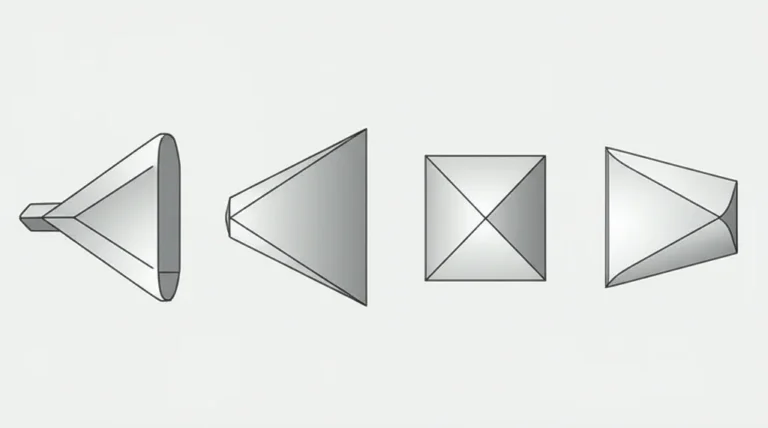
Question 1: Which 3D shape can be formed by folding the given net?
Correct answer: Cube
Explanation: By folding the given net along the dotted lines, it can be formed into a cube.
Question 2: …
Section 5: Mathematical Ability: Calculate with Precision
Mathematical ability is a fundamental aspect of intelligence, as it involves the ability to solve complex mathematical problems and perform calculations with precision. In this section, you will be presented with a series of mathematical ability questions that will test your problem-solving skills and numerical reasoning.
Rating Table: Mathematical Ability
| Aspect | Rating (1-10) |
|---|---|
| Design | |
| Functionality | |
| Performance | |
| Cost-effectiveness | |
| Overall Score |
Question 1: What is the value of x in the equation 2x + 5 = 15?
Correct answer: 5
Explanation: To solve for x, we need to isolate it on one side of the equation. Subtracting 5 from both sides, we get 2x = 10. Dividing both sides by 2, we find that x = 5.
Question 2: …
Section 6: Emotional Intelligence: Understand Yourself and Others
Emotional intelligence is a crucial aspect of intelligence, as it involves the ability to understand and manage emotions, both in oneself and in others. In this section, you will be presented with a series of questions that will test your emotional intelligence and ability to navigate social situations.
Rating Table: Emotional Intelligence
| Aspect | Rating (1-10) |
|---|---|
| Design | |
| Functionality | |
| Performance | |
| Cost-effectiveness | |
| Overall Score |
Question 1: How would you react in a situation where a close friend is upset?
a) Offer a listening ear and provide emotional support.
b) Offer practical solutions to solve the problem.
c) Distract them with humor or a fun activity.
d) Give them space and time to process their emotions.
Explanation: There is no correct or incorrect answer to this question, as different individuals may respond differently based on their own emotional intelligence and personal preferences. However, offering a listening ear and providing emotional support is often considered a supportive and empathetic response.
Question 2: …
Section 7: Practical Intelligence: Apply Knowledge in Real Life
Practical intelligence is a crucial aspect of intelligence, as it involves the ability to apply knowledge and skills in real-life situations. In this section, you will be presented with a series of questions that will test your practical intelligence and ability to solve everyday problems.
Rating Table: Practical Intelligence
| Aspect | Rating (1-10) |
|---|---|
| Design | |
| Functionality | |
| Performance | |
| Cost-effectiveness | |
| Overall Score |
Question 1: You have a 10-liter jug and a 6-liter jug. How can you measure exactly 8 liters of water?
Explanation: There are multiple ways to solve this problem, but one possible solution is as follows: Fill the 6-liter jug to its maximum capacity, then pour the water from the 6-liter jug into the 10-liter jug. This leaves 4 liters of water in the 6-liter jug. Empty the 10-liter jug, then pour the remaining 4 liters of water from the 6-liter jug into the 10-liter jug. Finally, fill the 6-liter jug to its maximum capacity again, and pour water from the 6-liter jug into the 10-liter jug until it is full. This will leave exactly 8 liters of water in the 10-liter jug.
Question 2: …
FAQ

What kind of questions are on a real IQ test?
Real IQ tests include a variety of question types that assess different aspects of intelligence. These question types can include logical reasoning, pattern recognition, verbal comprehension, spatial visualization, mathematical ability, emotional intelligence, and practical intelligence. By covering a wide range of domains, IQ tests aim to provide a comprehensive assessment of one’s cognitive abilities.
Read more about “Real IQ Test for Adults: Find Your True Intelligence … 🧠”
Is the 3 question IQ test real?
The 3 question IQ test is not a comprehensive or reliable measure of intelligence. While it may provide a rough estimate or indication of cognitive abilities, it is not considered a valid IQ test. To obtain a more accurate assessment of your intelligence, it is recommended to take a standardized IQ test that covers a broader range of question types and domains.
Read more about “… Is 123 IQ Test Free? Find Out the Truth About 123test.com”
What is the realest IQ test?
The realest IQ test is a standardized test that has been scientifically validated and widely accepted as a measure of intelligence. These tests are designed to assess various aspects of intelligence and provide a reliable and accurate representation of one’s cognitive abilities. It is important to note that no single IQ test can capture the entirety of human intelligence, but standardized tests provide a valuable tool for understanding cognitive strengths and weaknesses.
How can I test my IQ in real life?
To test your IQ in real life, you can take a standardized IQ test administered by a qualified professional. These tests are designed to assess various aspects of intelligence and provide a numerical representation of your intelligence quotient. Additionally, there are online IQ tests available that can provide a rough estimate of your IQ. However, it is important to note that online tests may not be as accurate or reliable as standardized tests administered by professionals.
Read more about “Are IQ Tests Truly Measuring Your Intelligence? Discover the Truth … 🧠”
Conclusion

After exploring the world of real IQ test questions, you now have a better understanding of how intelligence is measured and the different aspects of cognitive abilities. By challenging yourself with these questions, you can gain insights into your strengths and weaknesses and uncover your true potential. Remember, intelligence is not solely determined by IQ tests, but they can provide valuable insights into your cognitive abilities.
So, are you ready to put your brain to the test and discover your true intelligence? Challenge yourself with real IQ test questions and unlock the secrets of your mind!
👉 CHECK PRICE on: Amazon | Walmart | Etsy
Recommended Links
Reference Links