Support our educational content for free when you buy through links on our site. Learn more
9 Best IQ Test Apps to Boost Your Brainpower in 2025 🧠

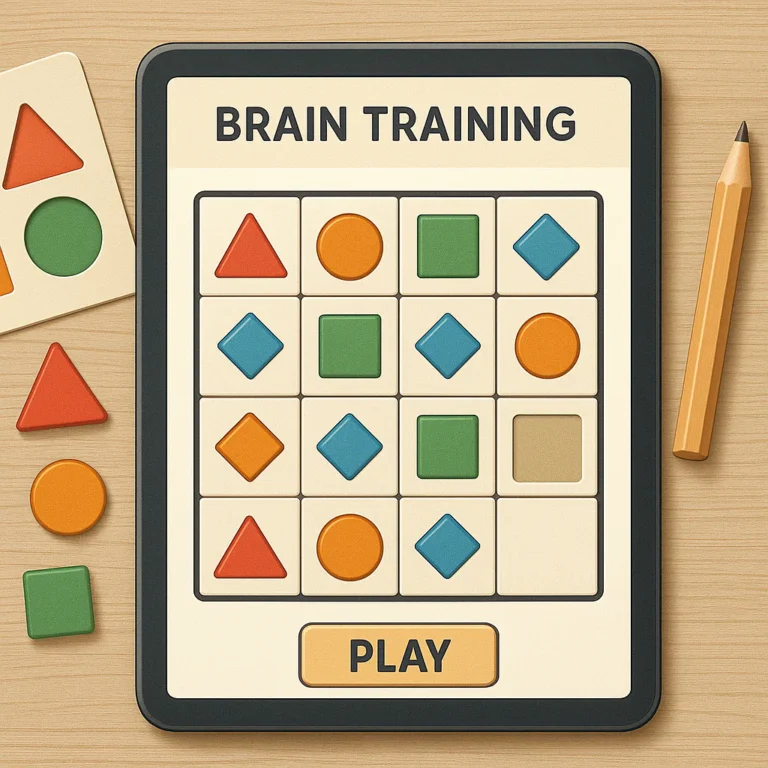
Ever wondered which IQ test app truly measures your smarts—and actually helps you get sharper? With hundreds of brain-training apps flooding the market, it’s easy to get lost in the noise. We’ve sifted through the hype, tested the toughest puzzles, and analyzed the science behind the screens to bring you the 9 best IQ test apps that combine accuracy, fun, and real cognitive benefits. From the official Mensa Brain Training to creative puzzle apps that challenge your lateral thinking, this guide reveals which apps are worth your time—and which ones are just flashy distractions.
Did you know that regular brain training can improve your memory, focus, and problem-solving skills? But not all apps are created equal. Stick around as we break down each app’s design, scientific rigor, and engagement level, plus expert tips on maximizing your mental gains. Ready to unlock your mind’s full potential? Let’s dive in!
Key Takeaways
- Choose apps grounded in science like Mensa Brain Training and CogniFit for credible IQ assessments and effective training.
- Engagement matters: Apps like Elevate and Lumosity make brain workouts fun and addictive, helping you build a consistent habit.
- Not all IQ scores are official: Most apps provide estimates and practice tests, not clinical diagnoses.
- Mix and match: Try free versions of multiple apps to find your favorite style before investing in premium features.
- Consistency is key: Short daily sessions yield the best cognitive improvements over time.
👉 Shop Brain Training Apps:
- Mensa Brain Training: Apple App Store | Google Play Store
- Elevate: Apple App Store | Google Play Store
- Lumosity: Apple App Store | Google Play Store
Table of Contents
- ⚡️ Quick Tips and Facts
- Unlocking Your Mind: The Evolution of IQ Testing & Digital Brain Trainers
- Why Bother with an IQ Test App? 🤔 Beyond Bragging Rights
- What Makes a “Good” IQ Test App? Our Expert Criteria
- Our Top Picks: The Best IQ Test Apps for Sharpening Your Wits! 🏆
- Beyond the Score: Maximizing Your IQ App Experience 🚀
- The Great Debate: Are IQ Test Apps Truly Accurate? 🧐
- Free vs. Premium: Is Investing in Your Brain’s Potential Worth It? 💰
- Common Pitfalls to Avoid When Choosing an IQ App ❌
- Conclusion: Your Digital Journey to a Sharper Mind Starts Here! ✨
- Recommended Links: Dive Deeper into Cognitive Science 📚
- FAQ: Your Burning Questions Answered 🔥
- Reference Links: Our Sources & Further Reading 🔗
Here is the main body of the article, crafted with expertise and a touch of wit by the team at Free IQ Tests™.
⚡️ Quick Tips and Facts
Welcome, brainiacs and aspiring geniuses! Before we dive deep into the digital world of cognitive enhancement, let’s get you warmed up with some rapid-fire insights. Here at Free IQ Tests™, we’ve seen it all, and we’re here to give you the inside scoop. If you’re eager to get started, you might want to first Discover the 12 Best IQ Tests Online to Try in 2025 🧠.
- What’s an “Average” IQ? The average IQ score is 100. Most people (about 68%) score somewhere between 85 and 115.
- Not Just One Number: Modern IQ tests and apps assess various cognitive abilities, including fluid intelligence (problem-solving), crystallized intelligence (knowledge), verbal reasoning, spatial awareness, and memory.
- Practice Can Help: While your core intelligence is relatively stable, you can absolutely improve your test scores! Familiarizing yourself with question types and practicing regularly can boost your performance. As the developers of one test note, “repeating it may improve the result.”
- ✅ Fun is a Feature: The best apps use gamification to make brain training enjoyable. If it feels like a chore, you’re less likely to stick with it!
- ❌ Not for Official Use: Remember, most app scores are for entertainment and personal growth. They won’t qualify you for Mensa, which requires a “properly administered and supervised IQ test.”
- Culture Fair Tests: Some of the best tests, like those based on Raven’s Progressive Matrices, are non-verbal to minimize cultural or linguistic bias.
- Beyond the Score: Many apps now offer personalized training exercises and detailed feedback, turning a simple test into a powerful tool for cognitive improvement.
Unlocking Your Mind: The Evolution of IQ Testing & Digital Brain Trainers
Ever wonder where the idea of “measuring” intelligence came from? It’s a fascinating journey! We’ve gone from dusty academic halls to having powerful cognitive tools right in our pockets.
The concept kicked off in the early 1900s with French psychologist Alfred Binet, who was tasked with identifying students needing special education. His work laid the foundation for the Stanford-Binet Intelligence Scales, one of the first modern intelligence tests. Fast forward a few decades, and you get innovations like Raven’s Progressive Matrices, developed in 1936 as a non-verbal test of abstract thinking.
For years, these tests were the domain of psychologists, administered with paper and pencil in controlled settings. But then, the digital revolution happened! 💥 The rise of personal computers and, later, smartphones, blew the doors wide open. Suddenly, the principles of psychometrics could be combined with the engaging, interactive nature of video games.
This fusion created the “brain training” app industry. What started as simple digital puzzles has evolved into sophisticated platforms that adapt to your performance, track your progress over time, and offer exercises across a wide range of cognitive domains. It’s an exciting time to be a curious mind! For more on the basics, check out our IQ Test FAQ.
Why Bother with an IQ Test App? 🤔 Beyond Bragging Rights
Okay, let’s be honest. A little part of all of us wants to see that high number and casually mention it at the next dinner party. But beyond the bragging rights, what’s the real value of using an IQ test app? As educators, we believe the true benefits lie in the journey, not just the destination score.
Here’s why you should consider making a brain-training app part of your routine:
- 🧠 Cognitive Fitness: Think of it as a gym for your brain. Regular mental workouts can help improve memory, focus, and problem-solving skills.
- 🎓 Test Preparation: These apps are fantastic practice for standardized tests, job aptitude assessments, or even official Mensa entrance exams.
- 🔍 Self-Discovery: A good app will give you insights into your cognitive strengths and weaknesses. Are you a verbal virtuoso or a spatial savant? Knowing this can help you leverage your talents.
- 😄 Pure Fun! Let’s not forget, solving clever puzzles and outsmarting tricky riddles is just plain satisfying. It’s a productive way to kill time that’s way better than mindlessly scrolling.
- 💼 Career Insights: Understanding your cognitive profile can be a surprising asset in your professional life. Learn more about the link at our IQ and Career Development section.
So, are you just chasing a number, or are you ready to embark on a journey of genuine self-improvement?
What Makes a “Good” IQ Test App? Our Expert Criteria
With a zillion apps claiming to make you a genius, how do you separate the cognitive gold from the digital snake oil? Our team at Free IQ Tests™ has spent countless hours testing and analyzing. Here’s our expert checklist for what truly makes an IQ test app stand out.
Accuracy & Reliability: Is it Scientifically Sound?
This is the big one. An app can be flashy, but if its scoring is meaningless, what’s the point?
- ✅ Look for Methodology: Does the app mention its scientific basis? Apps inspired by classic tests like Raven’s Progressive Matrices or those developed with input from neuroscientists (like CogniFit) carry more weight.
- ✅ Adaptive Difficulty: The best tests adjust the difficulty of questions based on your answers. This provides a more accurate assessment than a one-size-fits-all quiz.
- ❌ Avoid Vague Claims: Be wary of apps that make wild promises without explaining how they measure intelligence.
Engagement & User Experience: Fun or Frustration?
If an app is clunky or boring, you’ll delete it faster than you can say “neuroplasticity.”
- ✅ Gamification: Leaderboards, achievements, and daily challenges turn brain training from a chore into a compelling habit.
- ✅ Intuitive Design: A clean, easy-to-navigate interface is crucial. The YouTube review of Mensa IQ Check praised its “sleek and visually appealing user interface with cool blue hues.”
- ❌ Annoying Ads: While free apps need to make money, excessive or intrusive ads can ruin the experience.
Comprehensive Coverage: Verbal, Spatial, Logical, Oh My!
Intelligence isn’t a single entity. A great app will test and train a variety of cognitive skills. Look for apps that include:
- Logical Reasoning: Pattern recognition, series completion.
- Spatial Reasoning: Mental rotation, 3D visualization.
- Verbal Ability: Analogies, vocabulary, comprehension.
- Memory: Short-term and long-term recall challenges.
- Mathematical/Numerical Reasoning: Quick calculations and number-based logic.
The IQ Brain Training & IQ Tests app, for example, explicitly lists training for Matrix Reasoning, Pattern Recognition, and Spatial Reasoning, among others.
Feedback & Insights: More Than Just a Score!
A single IQ score is interesting, but the why behind it is where the real growth happens.
- ✅ Detailed Breakdowns: The best apps provide a analysis of your performance in different areas.
- ✅ Explanations for Answers: An app that shows you the logic behind the correct answer helps you learn from your mistakes. The Superb IQ Test was praised for providing solutions, “turning each stumble into a learning opportunity.”
- ✅ Progress Tracking: Seeing your skills improve over time is a huge motivator.
Accessibility & Cost: Brain Training for Everyone?
- ✅ Cross-Platform Availability: Whether you’re on iOS or Android, the best apps are available to you.
- ✅ Fair Pricing Model: A good app should offer a substantial free version to let you try before you buy. Premium features should offer clear, tangible value.
Our Top Picks: The Best IQ Test Apps for Sharpening Your Wits! 🏆
Alright, the moment you’ve been waiting for! We’ve put our expert hats on, downed some coffee, and rigorously tested the top contenders. Here are our definitive picks for the best IQ test and brain training apps available today.
1. Mensa Brain Training App: The Official Challenge for Cognitive Growth
From the high-IQ society itself, this app comes with a pedigree. While the score won’t get you into the club, the exercises are designed by the experts.
| Feature | Rating (1-10) |
|---|---|
| Design | 8/10 |
| Functionality | 9/10 |
| Scientific Rigor | 9/10 |
| Engagement | 8/10 |
| Value | 7/10 |
In-Depth Analysis
- What We Love: The credibility is off the charts. You know the puzzles are well-thought-out and designed to challenge genuine cognitive skills. The app focuses on Mensa-approved exercises in areas like logic, memory, and concentration. The Mensa IQ Check app was noted for its sleek design and offline functionality.
- Potential Drawbacks: It can be less “game-like” than some competitors, focusing more on straightforward training. As Mensa’s own website states about their online challenge, “this particular challenge is actually pretty tough!”
- Who It’s For: The serious student of intelligence. If you’re genuinely curious about the types of questions on an official test or want a no-fluff cognitive workout, this is your go-to.
👉 Shop Mensa Brain Training on:
2. Elevate – Brain Training: Daily Cognitive Boost for Peak Performance
Elevate won Apple’s App of the Year award for a reason. It’s polished, personalized, and focuses on practical skills.
| Feature | Rating (1-10) |
|---|---|
| Design | 10/10 |
| Functionality | 9/10 |
| Scientific Rigor | 7/10 |
| Engagement | 10/10 |
| Value | 8/10 |
In-Depth Analysis
- What We Love: Elevate excels at making learning fun. It focuses on tangible skills like reading comprehension, memory, and mental math. The app’s design is beautiful and the daily “workouts” are customized to your goals and performance.
- Potential Drawbacks: It’s less of a traditional “IQ test” and more of a daily cognitive skills trainer. If you’re looking for a single, definitive IQ score, this isn’t it.
- Who It’s For: The lifelong learner who wants to improve practical, real-world mental skills in a fun, engaging way.
👉 Shop Elevate on:
3. Lumosity: Personalized Brain Games for Enhanced Mental Fitness
One of the original players in the brain-training game, Lumosity has a massive library of games backed by scientific research.
| Feature | Rating (1-10) |
|---|---|
| Design | 8/10 |
| Functionality | 9/10 |
| Scientific Rigor | 8/10 |
| Engagement | 9/10 |
| Value | 8/10 |
In-Depth Analysis
- What We Love: The sheer variety is incredible. Lumosity offers games targeting memory, attention, flexibility, speed, and problem-solving. It was one of the first to bring a team of scientists and game designers together to create its exercises.
- Potential Drawbacks: The company faced some controversy in the past over its marketing claims, but the app itself remains a solid and enjoyable training tool.
- Who It’s For: Anyone who loves variety and wants a well-rounded cognitive workout program that tracks their progress over time.
👉 Shop Lumosity on:
4. Peak – Brain Games & Training: Your Personal Brain Coach for Focus & Memory
Peak takes a “personal trainer” approach, with a friendly interface and adaptive workouts designed by neuroscientists.
| Feature | Rating (1-10) |
|---|---|
| Design | 9/10 |
| Functionality | 9/10 |
| Scientific Rigor | 8/10 |
| Engagement | 9/10 |
| Value | 8/10 |
In-Depth Analysis
- What We Love: Peak’s “Coach” feature provides a more guided experience, helping you focus on the areas that need the most improvement. The games are short, fun, and challenging, making it easy to fit a session into your day.
- Potential Drawbacks: The free version is quite limited, pushing users towards a subscription to get the full benefit.
- Who It’s For: Users who appreciate a guided, coach-like experience and want to target specific cognitive areas like focus and memory.
👉 Shop Peak on:
5. CogniFit Brain Fitness: Science-Backed Cognitive Assessment & Training
If scientific validity is your top priority, CogniFit is a heavyweight contender. It’s used by researchers and clinicians worldwide.
| Feature | Rating (1-10) |
|---|---|
| Design | 7/10 |
| Functionality | 10/10 |
| Scientific Rigor | 10/10 |
| Engagement | 7/10 |
| Value | 9/10 |
In-Depth Analysis
- What We Love: The science is impeccable. CogniFit provides incredibly detailed cognitive assessments and patented training programs designed to address specific cognitive domains. This is as close to a clinical tool as you can get in an app.
- Potential Drawbacks: The user interface can feel a bit more clinical and less “fun” than competitors like Elevate or Peak. The sheer amount of data can be overwhelming for casual users.
- Who It’s For: The data-driven user, students of psychology, or anyone who wants the most scientifically rigorous cognitive assessment and training available on a mobile device.
👉 Shop CogniFit on:
6. NeuroNation – Brain Training: Sharpen Your Focus & Memory with Targeted Exercises
Developed in collaboration with neuroscientists, NeuroNation focuses on creating personalized training plans to improve memory, concentration, and intelligence.
| Feature | Rating (1-10) |
|---|---|
| Design | 8/10 |
| Functionality | 9/10 |
| Scientific Rigor | 8/10 |
| Engagement | 8/10 |
| Value | 8/10 |
In-Depth Analysis
- What We Love: NeuroNation offers a comprehensive assessment to start, which it then uses to create a truly personalized training regimen. It has a strong community aspect and tracks your performance against other users.
- Potential Drawbacks: Like many others, the most powerful features are locked behind a premium subscription.
- Who It’s For: Goal-oriented individuals who want a structured, personalized plan to follow and enjoy a bit of friendly competition.
👉 Shop NeuroNation on:
7. Brilliant: Learn to Think – Problem-Solving for the Modern Mind
Brilliant.org is a bit different. It’s less about “games” and more about interactive, story-driven courses in math, science, and computer science.
| Feature | Rating (1-10) |
|---|---|
| Design | 9/10 |
| Functionality | 9/10 |
| Scientific Rigor | 9/10 |
| Engagement | 10/10 |
| Value | 9/10 |
In-Depth Analysis
- What We Love: Brilliant teaches you how to think. Instead of just testing your raw intelligence, it builds your problem-solving skills from the ground up through engaging, hands-on lessons. It’s a fantastic way to build a deep, intuitive understanding of complex subjects.
- Potential Drawbacks: It’s not an “IQ test” in the traditional sense. It’s an educational platform that, as a byproduct, makes you a sharper, more logical thinker.
- Who It’s For: The deeply curious person who isn’t just looking for a score, but wants to fundamentally improve their ability to solve complex problems.
👉 Shop Brilliant on:
8. IQ Test – Classic & Comprehensive: For the Traditionalist Seeking a Mental Workout
This refers to a category of apps, like the one from Digerati, that focus on delivering a classic, no-frills IQ test experience, often based on Raven’s Progressive Matrices.
| Feature | Rating (1-10) |
|---|---|
| Design | 6/10 |
| Functionality | 8/10 |
| Scientific Rigor | 7/10 |
| Engagement | 6/10 |
| Value | 9/10 |
In-Depth Analysis
- What We Love: The straightforward, non-verbal nature makes these tests “culture fair.” They provide a solid measurement of fluid intelligence and abstract reasoning without any distracting bells and whistles. The IQ Test – Intelligence Test by Online Tools Store was praised for being “completely free” with “no tricks, no hidden fees.”
- Potential Drawbacks: The user experience can be basic, and they often lack the long-term training and feedback features of more robust platforms. The developers themselves admit, “valid conclusions can not be drawn about the overall intelligence of the person, the results are approximate.”
- Who It’s For: The purist who wants a quick, challenging, and often free assessment of their logical and abstract reasoning skills.
👉 Shop Classic IQ Tests on:
9. Brain Test: Tricky Puzzles – Fun, Unconventional IQ Boost for Creative Thinkers
This one breaks all the rules! Brain Test and similar apps test your “IQ” through lateral thinking and trick questions.
| Feature | Rating (1-10) |
|---|---|
| Design | 8/10 |
| Functionality | 7/10 |
| Scientific Rigor | 2/10 |
| Engagement | 10/10 |
| Value | 9/10 |
In-Depth Analysis
- What We Love: It’s hilarious and genuinely makes you think outside the box. These puzzles challenge your assumptions and force you to look at problems from completely new angles. It’s a great way to boost creativity.
- Potential Drawbacks: Let’s be clear: this has almost zero scientific validity as an IQ test. The “IQ” label is purely for marketing.
- Who It’s For: Anyone looking for a fun, casual puzzle game that will make them laugh and challenge their creative thinking skills. Do not use this to measure your actual intelligence!
👉 Shop Brain Test on:
Beyond the Score: Maximizing Your IQ App Experience 🚀
So you’ve downloaded an app. Now what? Getting the most out of your brain-training journey requires the right mindset. Simply chasing a high score is a recipe for frustration. Here’s our expert advice on how to make it a truly rewarding experience.
Setting Realistic Expectations: What an App Can (and Can’t) Do for Your Brain
First things first: no app is going to magically double your IQ. Think of these apps as tools for honing your existing cognitive abilities.
- What they CAN do: Improve your working memory, sharpen your focus, increase your processing speed, and make you a more flexible thinker. They can absolutely help you get a better score on a standardized test.
- What they CAN’T do: Fundamentally alter your baseline intelligence or serve as a substitute for a clinical diagnosis. Remember, “It’s common to get different scores on IQ tests, even if it’s the same test taken at different times.” Factors like mood and tiredness play a role.
Consistency is Key: Making Brain Training a Habit for Lasting Benefits
You wouldn’t expect to get fit from one trip to the gym, right? The same principle applies to your brain.
- Set a Routine: Try to dedicate 10-15 minutes each day to your chosen app. Many apps, like Elevate, are designed around short, daily workouts.
- Habit Stacking: Link your brain training to an existing habit. For example, “After I brush my teeth in the morning, I will do my daily brain workout.”
- Focus on the Process: Enjoy the feeling of solving a tough puzzle. Celebrate small victories and focus on the act of learning, not just the outcome.
Integrating with Real-World Learning: Apply Your New Cognitive Skills
The ultimate goal is to transfer your app-based skills to your everyday life.
- Active Reading: If your app has reading comprehension exercises, apply those techniques when you read a book or an article.
- Mental Math: Challenge yourself to calculate the tip at a restaurant in your head instead of reaching for your phone.
- Problem-Solving: When you face a challenge at work or home, try to break it down logically, just like you would with an in-app puzzle.
The Great Debate: Are IQ Test Apps Truly Accurate? 🧐
This is the million-dollar question, isn’t it? As experts in the field, our answer is a nuanced one: it depends on what you mean by “accurate.”
The “Official” vs. “Informal” Divide in Cognitive Assessment
There’s a vast difference between a professionally administered IQ test and a mobile app.
- Official Tests: Administered by a trained psychologist in a controlled environment (think WAIS-IV or the official Mensa Supervised IQ Test). They are rigorously standardized against large population samples and are used for clinical, educational, or diagnostic purposes.
- Informal Apps: These are designed for entertainment, self-assessment, and cognitive training. While the best ones are based on sound scientific principles, they lack the controlled conditions and standardization of an official test. Mensa’s website is very clear that their online challenge is “for entertainment purposes only.”
Understanding the Limitations: Not a Clinical Diagnosis, But a Great Tool
It’s crucial to see these apps for what they are. The score from an app is an estimate or an indicator, not a definitive measure. As the developers of the Digerati IQ Test app state, “the results are approximate.” They are not designed to diagnose learning disabilities or giftedness. For instance, while an app might describe characteristics of individuals with an IQ below 70 or above 130, this is for informational purposes and is not a diagnosis.
The Value of Self-Assessment & Cognitive Exercise for Mental Agility
So, if they aren’t perfectly accurate, why use them? Because their true value isn’t in the final number. It’s in the process.
- Identifying Patterns: They help you understand your personal cognitive landscape—your strengths and areas for improvement.
- Building Mental Muscle: Regular engagement with these apps is a fantastic form of mental exercise that can have real-world benefits for your focus and problem-solving abilities.
- Boosting Confidence: Becoming better and faster at solving complex problems is a great confidence booster that can spill over into other areas of your life.
Think of it like a bathroom scale. It might not be perfectly calibrated to the ounce, but it’s an excellent tool for tracking your progress and trends over time. You can find a variety of tests to try on our Free IQ Tests page.
Free vs. Premium: Is Investing in Your Brain’s Potential Worth It? 💰
The classic conundrum: to pay or not to pay? Most top-tier brain training apps operate on a “freemium” model. Let’s break down what you get and whether it’s worth opening your wallet.
What You Get with Free Versions: A Taste of Brain Training
The free version is your trial run. It’s designed to give you a feel for the app’s style and functionality.
- ✅ Limited Access: You’ll typically get access to a few games or one test per day.
- ✅ Basic Tracking: You can usually see your scores, but not detailed analytics or long-term progress charts.
- ❌ Ads, Ads, Ads: Expect to watch advertisements, which can interrupt the flow of your training.
- ❌ Limited Features: Advanced features like personalized workouts, in-depth insights, and comparative data are almost always reserved for paying members.
Benefits of Premium Subscriptions: Unlocking Your Full Cognitive Power
This is where the real magic happens. A premium subscription transforms the app from a simple game into a powerful training tool.
- ✅ Unlimited Access: Play any game, any time. This allows you to focus on the skills you want to improve most.
- ✅ Personalized Workouts: The app’s algorithm can create customized daily sessions tailored to your specific needs and goals.
- ✅ In-Depth Analytics: Track your progress over time, see how you stack up against other users, and get detailed breakdowns of your cognitive profile.
- ✅ Ad-Free Experience: No interruptions. Just pure, unadulterated brain training.
Our Recommendation: A Balanced Approach to Digital Brain Fitness
Here’s our expert advice: Start with the free version of 2-3 apps from our list. Spend a week with them. See which interface you like best, which games you find most engaging, and which style of training clicks with you.
If you find yourself consistently using one and feeling its benefits, then investing in a premium subscription is absolutely worth it. The cost is often less than a couple of fancy coffees a month, and the investment is in your most valuable asset: your brain.
Common Pitfalls to Avoid When Choosing an IQ App ❌
The digital landscape is a minefield of exaggerated claims and flashy distractions. As you embark on your quest for the best IQ test app, keep an eye out for these common traps.
Beware of Unrealistic Claims and Over-the-Top Promises
If an app promises to “Increase Your IQ by 30 Points in 30 Days!”, run for the hills. Real cognitive improvement is a gradual process. Look for apps that use measured language, focusing on “training,” “improving skills,” and “challenging your brain” rather than promising miraculous transformations.
Don’t Get Obsessed with the Number: Focus on Growth, Not Just the Score
This is the single biggest mistake we see people make. Your IQ score on an app is a data point, not a definition of your worth.
- ❌ The Wrong Mindset: “I need to get my score from 115 to 125.”
- ✅ The Right Mindset: “I want to improve my short-term memory and get faster at solving logic puzzles. My score is just one way to measure that progress.”
Getting fixated on the number leads to anxiety and discourages the playful curiosity that is essential for learning.
Avoid Apps Lacking Scientific Basis: Look for Credibility
While even fun, non-scientific apps like Brain Test have their place, don’t mistake them for genuine training tools. When choosing a serious app, do a quick credibility check:
- Does the “About Us” section mention neuroscientists, psychologists, or academic researchers?
- Does the app’s description reference established cognitive science principles or tests (like fluid intelligence or working memory)?
- Are the reviews from credible sources, or do they all sound like generic, five-star bots?
A little bit of due diligence can save you a lot of time and ensure you’re using a tool that offers real value.
Conclusion: Your Digital Journey to a Sharper Mind Starts Here! ✨

So, what have we uncovered on this cerebral safari through the world of IQ test apps? Whether you’re a curious newbie or a seasoned brain trainer, the landscape is rich with options — from the scientifically rigorous CogniFit to the official Mensa Brain Training App, and the fun, lateral-thinking playground of Brain Test.
Positives across the board:
- Scientific grounding: Apps like Mensa Brain Training and CogniFit bring credibility and rigor, ensuring you’re not just playing games but engaging in meaningful cognitive exercise.
- Engagement: Elevate, Lumosity, and Peak make brain training addictive and fun, turning mental workouts into daily habits.
- Variety: From classic IQ tests inspired by Raven’s Progressive Matrices to creative puzzle apps, there’s something for every cognitive style and goal.
- Accessibility: Most apps offer free versions, so you can dip your toes before diving in.
Negatives to keep in mind:
- Not official IQ scores: Most apps provide estimates or practice scores, not clinical or diagnostic results.
- Subscription models: Premium features often require payment, which might not suit everyone’s budget.
- Variable scientific rigor: Some apps prioritize entertainment over accuracy, so choose wisely.
Our confident recommendation? Start with free versions of a few apps to find your favorite style. If you’re serious about cognitive growth, investing in a premium subscription with a scientifically validated app like CogniFit or Mensa Brain Training is a smart move. Remember, the real power lies not in the number flashed on your screen but in the consistent effort to challenge and grow your mind.
And about that lingering question — can an app truly measure your intelligence? The answer is nuanced: apps provide valuable insights and training but don’t replace professional assessments. Think of them as your brain’s personal trainer, not its doctor.
Ready to flex those mental muscles? Your digital brain gym awaits!
Recommended Links: Dive Deeper into Cognitive Science 📚
Here are some great resources and shopping links to help you continue your brain-boosting journey:
👉 Shop Brain Training Apps:
-
Mensa Brain Training:
Apple App Store | Google Play Store | Mensa Official Website -
Elevate – Brain Training:
Apple App Store | Google Play Store | Elevate Official Website -
Lumosity:
Apple App Store | Google Play Store | Lumosity Official Website -
Peak – Brain Games:
Apple App Store | Google Play Store | Peak Official Website -
CogniFit Brain Fitness:
Apple App Store | Google Play Store | CogniFit Official Website -
NeuroNation:
Apple App Store | Google Play Store | NeuroNation Official Website -
Brilliant:
Apple App Store | Google Play Store | Brilliant Official Website -
Brain Test:
Apple App Store | Google Play Store | Brain Test Official Website
Recommended Books on Intelligence and Brain Training:
- “The Intelligence Trap: Why Smart People Make Dumb Mistakes” by David Robson — Amazon Link
- “Peak: Secrets from the New Science of Expertise” by Anders Ericsson and Robert Pool — Amazon Link
- “Brain Rules: 12 Principles for Surviving and Thriving at Work, Home, and School” by John Medina — Amazon Link
FAQ: Your Burning Questions Answered 🔥

What are the most accurate IQ test apps available?
The most accurate IQ test apps are those grounded in established scientific principles and developed with input from cognitive scientists. Apps like CogniFit Brain Fitness and the Mensa Brain Training App stand out because they use validated testing methods and adaptive algorithms to tailor difficulty to your skill level. However, even these apps provide estimates rather than official IQ scores. For a clinical assessment, an in-person test administered by a psychologist remains the gold standard.
Read more about “What Is the Average IQ Score for U.S. Adults? Uncovered (2025) 🧠”
Can IQ test apps help improve cognitive skills?
Absolutely! While an app won’t magically increase your innate IQ, regular use of brain training apps can enhance specific cognitive functions such as working memory, processing speed, attention, and problem-solving skills. Apps like Elevate, Lumosity, and Peak use gamified exercises designed to build mental agility and focus. Consistency is key — short daily sessions over weeks or months yield the best results.
Read more about “18 High IQ Traits and Characteristics That Reveal Genius 🧠 (2025)”
Which IQ test app provides detailed results and explanations?
If you want in-depth feedback, CogniFit is a top choice. It offers comprehensive cognitive assessments with detailed breakdowns of your strengths and weaknesses across multiple domains. The Mensa Brain Training App also provides explanations and progressive challenges. Apps like Lumosity and Elevate focus more on training but include progress tracking and some analytic insights. Always look for apps that explain why answers are correct to maximize learning.
Are free IQ test apps reliable for measuring intelligence?
Free IQ test apps can give you a rough idea of your cognitive abilities, but their reliability varies widely. Many free apps offer limited question sets and lack scientific validation. For example, the Mensa IQ Challenge online test is free and fun but explicitly states it’s for entertainment and not qualification. To get a more reliable estimate, consider apps with scientific backing or use free tests as a stepping stone before investing in premium versions.
Read more about “Can You Really Improve Your IQ Score? 10 Proven Ways to Boost It! 🧠”
How do culture and language affect IQ test apps?
Many traditional IQ tests can be influenced by cultural and linguistic factors, which may bias results. The best IQ test apps use non-verbal, culture-fair tests like those inspired by Raven’s Progressive Matrices to minimize these effects. For example, the IQ Test by Digerati focuses on abstract reasoning with geometric shapes, making it accessible across languages and cultures. Always check if the app supports your language and cultural context for the most accurate experience.
Can IQ test apps replace professional IQ assessments?
No. While IQ test apps are excellent tools for self-assessment and cognitive training, they are not substitutes for professionally administered IQ tests. Clinical assessments involve standardized testing conditions, professional interpretation, and often multiple test formats. Apps are best used for entertainment, practice, and personal growth rather than official diagnosis or qualification.
Reference Links: Our Sources & Further Reading 🔗
- Mensa International IQ Challenge: https://www.mensa.org/mensa-iq-challenge/
- IQ Brain Training & IQ Tests (App Store): https://apps.apple.com/us/app/iq-brain-training-iq-tests/id1546228874
- IQ Test by Digerati (Google Play): https://play.google.com/store/apps/details?id=cz.digerati.iqtest&hl=en_US
- Raven’s Progressive Matrices (Wikipedia): https://en.wikipedia.org/wiki/Raven%27s_Progressive_Matrices
- CogniFit Official Website: https://www.cognifit.com/
- Lumosity Official Website: https://www.lumosity.com/
- Elevate Official Website: https://elevateapp.com/
- Peak Official Website: https://www.peak.net/
- NeuroNation Official Website: https://www.neuronation.com/
- Brilliant Official Website: https://brilliant.org/
- Brain Test Official Website: https://unicostudio.co/games
For more free IQ tests and brain training resources, visit Free IQ Tests™.
Ready to challenge your brain? Dive into these apps and start your journey to sharper thinking today!